Hippo Tusk / Sculpted Ivory
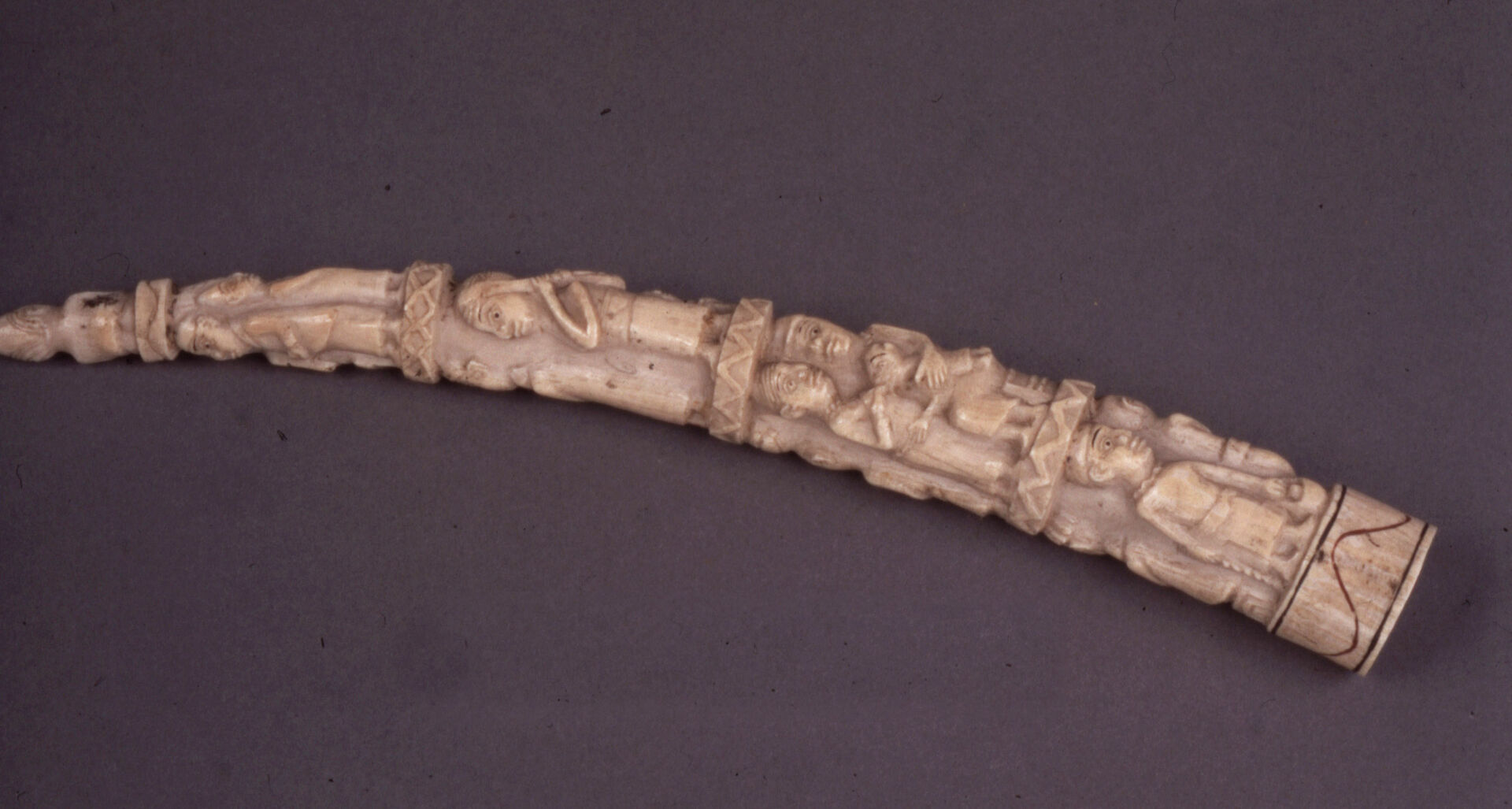
(UEM7398) Carved ivory made from a hippopotamus tusk. Its tip is carved in the form of a kneeling female figure. The tusk’s body is filled with carvings of motifs indicating animal and human figures, such as women, men, and children, depicted in daily life activities. The central motifs of Luango carved ivory sculptures are human and animal figures depicted in scenes revolving around specific themes. The figures are always viewed from the side, in profile, while the figure on the tusk’s tip has a three-dimensional figure. Luango artisans created carved ivory sculptures, indicating their sophisticated skill and historical heritage.
The Lungano area, where the sculpted ivory tusk was initially crafted, was at the time a thriving trading hub for European individuals and companies, mainly from Portugal, the Netherlands, but also from Scandinavia and the Middle East. The trade centred on ivory, cloth, and enslaved people from the interior. The transnational milieu of this historical period seems to have influenced the imagery of carvers and other artists of the region. The motif and carving of this hippopotamus tusk, depicting units of women, men, and children, suggest that it was intended as a potential souvenir for foreign traders visiting the region. Sculpted ivory from elephant and hippopotamus tusks was made for local use as exclusive trumpets used in ceremonial contexts and on royal burial grounds, as gifts in diplomatic exchanges, and was also commissioned for European clients.
Material: Hippopotamus tusk
Region: Equatorial Congo, Luango
Length: 30 cm.
Arrival: Bought by the museum from J. F. G. Umlauff, Umlauff Museum, Hamburg, 1888.
Photo
Hanne Buxrud
