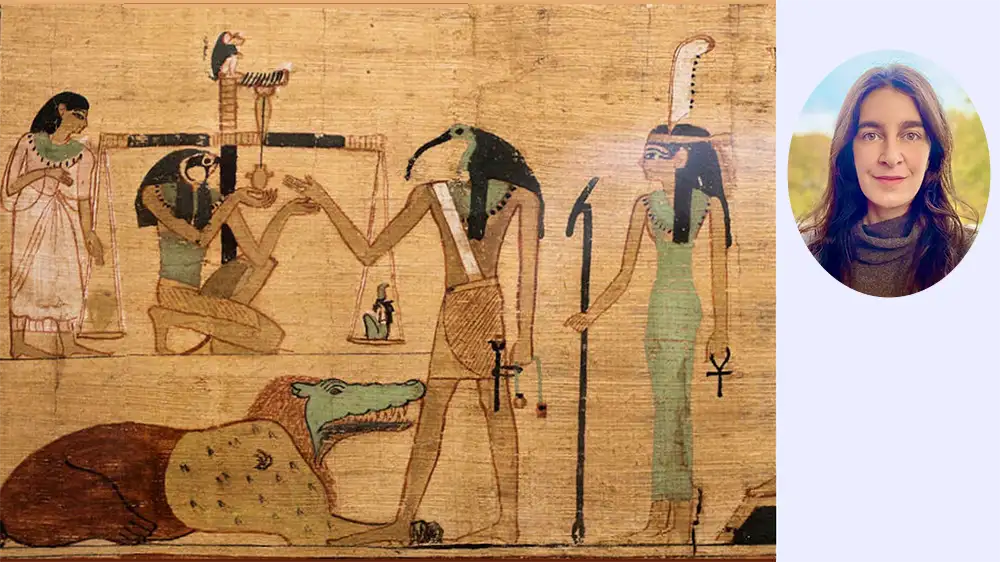
Focusing on a unique corpus of anthropoid coffins and papyri from the Bab el-Gasus cache (c. 1070–945 BCE), now dispersed across museums around the world including the Museum of Cultural History in Oslo, the project explores how emotional expressions were shaped and intensified in periods of political and social instability, while also reflecting broader, enduring cultural norms. It examines visual and textual “emotional markers” left by ancient artists, patrons, tomb robbers, archaeologists, and modern institutions, tracing how these layers of meaning accumulate over time.
Bringing together art history, archaeology, the history of emotions, and psychology, this project also addresses how such artefacts can be used in contemporary museum and artistic contexts to foster emotional literacy. Through collaboration with the museum in developing the exhibition MUMMY with an emotions-focused lens, and through planned collaborations with Kulturtanken – The Cultural Schoolbag, educators, and artists, the project explores how children and broader audiences respond to emotionally charged heritage objects.
By bridging past and present, this presentation argues that ancient art is not only a record of historical experience but also an active medium for emotional learning, with implications for museum practice, education, and wellbeing.
About the speaker
Dr Atena Ungureanu is a Marie Skłodowska-Curie Postdoctoral Fellow at the Museum of Cultural History, University of Oslo. Her research explores the intersection of art history, archaeology, and the history of emotions, with a focus on ancient Egyptian visual culture and its modern reception.
She previously held a postdoctoral position at the Institute of Archaeology, University College London (UCL), where she also completed her PhD, and has been a visiting research scholar at Yale University.