Although there are some potteries of other pre-Columbian societies, most of the ceramics of the Jones collection stem from the North Coast of Peru, an area inhabited by different societies until the Inca conquest in the 1470s, known for their exquisite works of art, gold and silver jewelry.
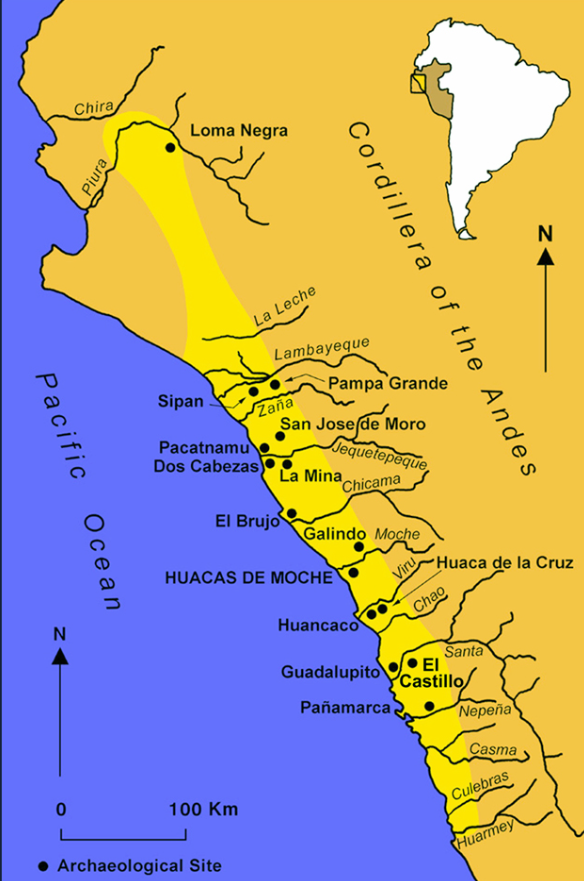
While archaeological research began already in the early 20th century, it is only with the discovery of the extremly rich and complex tomb of the “Lord of Sipán” in the Huaca Rajada, in the Lambayeque valley, in 1987, that large scale projects could be launched that provided new data related to different research problems. Since then, elite burials have been excavated that confirm a pronounced social hierarchy in Moche society and provide contexts to better understand Moche organization, materiality and iconography.
The collector Henry M. Jones
It is not known why Henry M. Jones decided to donate his collection to the Ethnographic Museum, 19 years after his period of service in Norway ended. Most likely, he acquired these archaeological objects while he was Consul General in Lima from 1894 to 1898.
.png)
During the second half of the 19th century wealth from the guano business was invested in creating extensive sugar plantations at the Peruvian North coast, where pre-Columbian sites were found. Large archaeological collections of grave goods were compiled in these heydays of collecting in Peru.
Like most museum collections of this kind, the Jones collection consists mainly of fine-ware ceramics with distinctive forms and decorations. Among the great variety of objects, it is noticeable that Jones was particularly interested in vessels representing portrait heads and sound instruments.
Portrait heads - Moche political organization
Portraits of recognizable individuals in Moche society are unique among archaeological items of pre-Columbian America. Vessels with portraits are restricted to the southern Moche region.
Based on a large sample the archaeologist Christopher Donnan identified 750 individuals whose portraits were reproduced with molds. Some portrayed lords wear consistently the same adornments, others have different accessories (headdresses, face paintings, or adornments) at different moments of their life. Some personalities are represented as early as teenagers, so it can be assumed that rulership was inherited. The large number of lords represented can be explained by independent chiefdoms controlling the coastal area, connected by alliances, exchange and a common belief system. This is confirmed by Spanish chronicles of the 16th century.

The other focus of Henry Jones´s collection are sound instruments from different pre-Columbian societies from the Peruvian North coast (Moche, Wari, Chimu, Sicán-Chimú). A wide range of pipes, flutes, trumpets, whistles, ocarinas, whistling vessels, bells, rattles, drums have been found in ceremonial centers. Also, jewelry and accessories made of precious materials were designed as conspicuously visible sound instruments.
The images and sound of the instruments were essential for Moche performances in sacred spaces. These ritual plays took place in plazas where 6000 – 12000 participants could come together, for example in the plaza of the Huaca de la Luna (Moche Valley). Recent experiments show that low frequency instruments like drums and trumpets covered this large areas and must have had a mesmerizing effect on the participants.
The double-chambered whistling bottles were probably used in smaller grave side rituals. The whistle inside of the bottle produces a soft sound by moving the water between the chambers through the attached connecting tube, similar to the chirps of a bird.

Moche images
Some Moche representations on ceramics, murals and other media are striking by their „realism“. People are depicted in their activities but also their illnesses. A very common disease represented is the Leishmaniasis, which is transmitted by sandflies and causes skin damage to nose and mouth. Also, a blind man is represented in the Jones collection. Interventions like amputations are common in Moche iconography. Amputated, hands, arms, feet and legs, and even the corresponding prostheses, have been found by archaeologists.


Animals
The Moche depicted domesticated animals as llamas, dogs and guinea pigs. The llama from the highlands served as a pack animal, provider of meat, wool, hide, and bones. Llamas were also sacrificed and were found accompanying the dead.
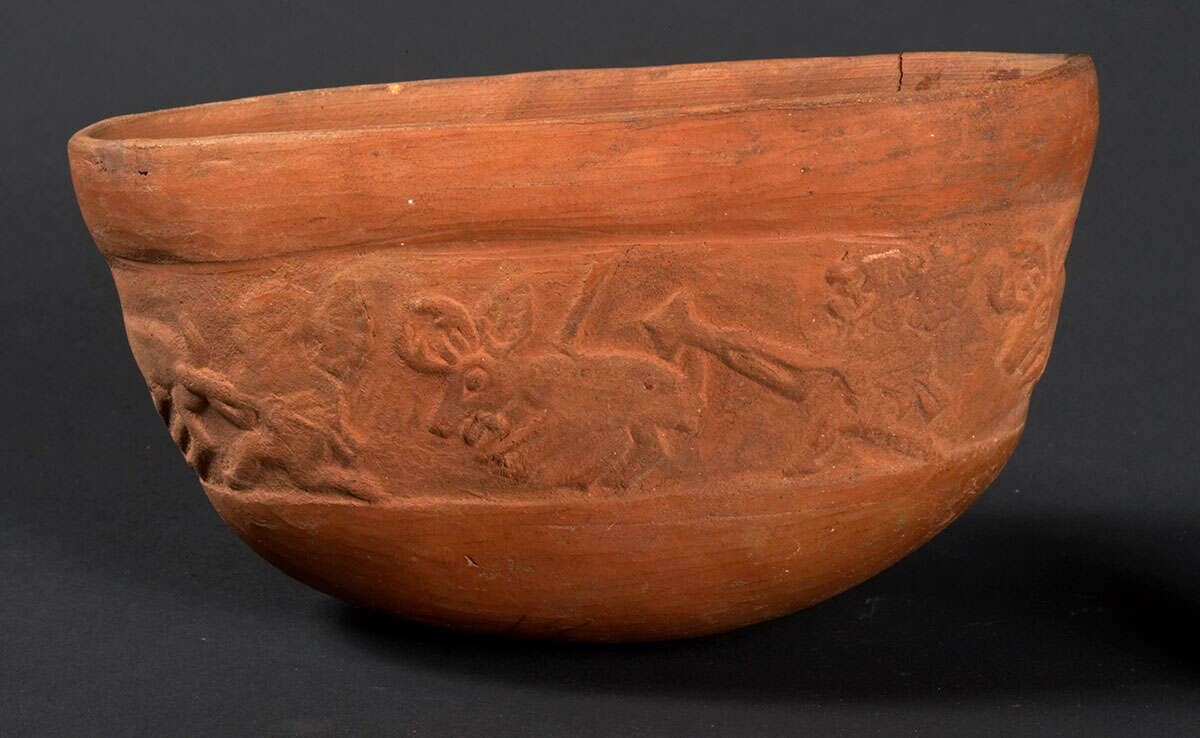
Sea animals from the guano islands off the coast are represented, as there are sea lions, cormorants, ospreys. As well as the Spondylus, the bivalve imported from the warmer sea off the Ecuadorian coast, which was a common burial offering. The sea snail, Strombus, was used as a trompet in rituals and on the battlefield. Inhabitants of the surrounding desert are foxes (Pseudalopex sechurae),lizards (Dicrodon hombergi) and deer (Odocoileus sp.). The white tail deer descends from the mountains in winter times to feed on the fruits of the desert and was then hunted with clubs by the Moche elite chasing them into prepared nets. Wild animals, like felines, foxes, deer, iguanas, fish, wild ducks and birds are represented in their natural form but also anthropomorphized in Moche art.
Vegetables
The Moche and the Chimú had access to different ecological zones: the Pacific Ocean with rich fisheries, the river valleys provided cotton, squash, maize and a variety of fruits, and the borderlands between the coast and the Andean highland in the upper river valleys, where coca, chili pepper and tropical fruits were cultivated and permitted interaction with the highlands. The different valleys and altitudes produced diverse crops of fruits, vegetables, and plant products for exchange with fish and other marine animals.
These ecosystems, regularly menaced by El Niño causing draughts or severe flooding, were ritually “controlled” by the lords. A heavy El Niño at the end of the 6th century contributed to social fragmentation and internal conflicts and initiated the collapse of Moche civilization.
Moche Belief System
The isolated images and complex scenes in Moche iconography are related to larger ideological contexts in which the ritual calendar played an important role. A set of deities and ritual practices seem to have been shared by north coast societies. These images are part of a larger iconographic narrative transmitted not only on pottery but also on painted murals, textiles, adornments in gold, silver, semi-precious stones. As there are no contemporary texts describing the iconography, research must rely on archaeological evidence, the complex iconography and traditions recorded by Spanish chroniclers. What can be said is that there seems to have been an enduring living-dead relationship and a common belief in ritually controlled supernatural forces.
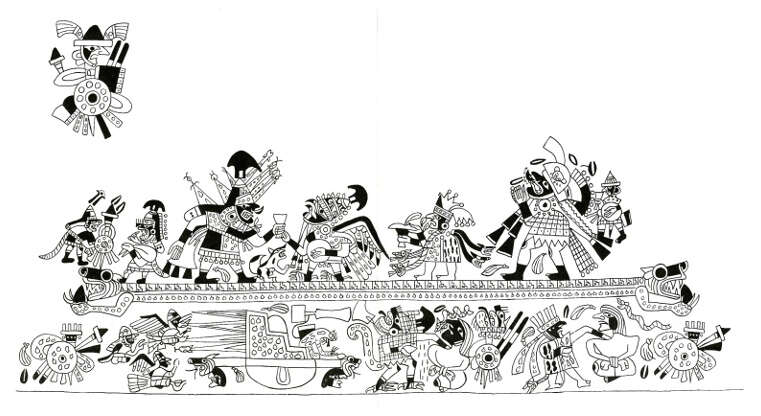
A complex fine line painting on a ceramic vessel depicts supernatural beings gathered for a toast with a goblet of human blood from sacrificed warriors in the lower part. The sacrificed warriors seem to originate from competing (non-local) Moche polities.
What scholars now agree upon is the existence of small autonomous polities with a shared ideology and iconography. In this context the molds to manufacture ceramics are not a mere functional tool but serve to transmit ideology.
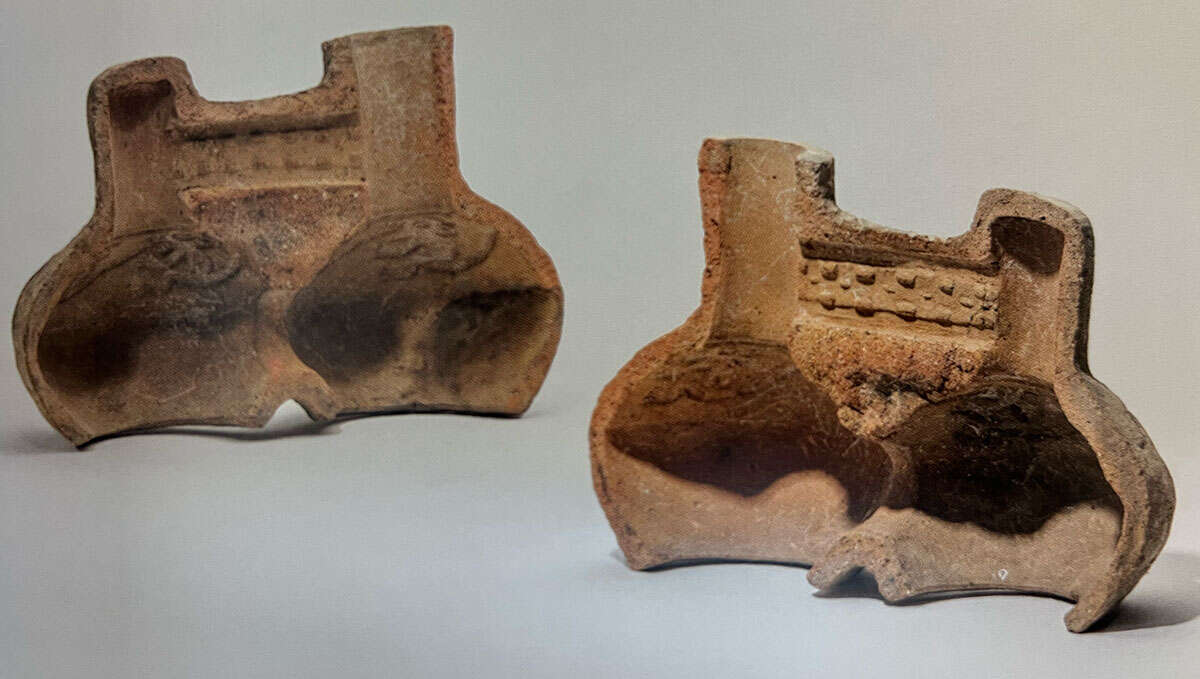
This explains the important role craft specialist had in Moche as well as in Chimú society. At an extensive urban sector at the Huacas de Moche (Huaca del Sol y Huaca de la Luna) the most important Moche ceremonial complex in the Moche Valley (AD 450-600), the ruling elite was surrounded by a large urban population of craft specialist producing ceramics, textiles, metalwork; keepers of ritual objects; engineers for the construction of irrigation canals; people for the maintenance of canals and the distribution of water; architects, adobe makers, masons etc.
Chimú
After the Moche society collapsed the Chimú state was established around AD 900-1470 approximately in the same area as the Moche civilization. A heavy El Niño event around AD 1100 was probably the trigger for the Chimú to expand to the south and later to the north, where regional centers were established, gaining control over desired resources including territory, labor, trade routes, and key goods such as copper, Spondylus, and Coca leaves. The Chimú combined direct and indirect imperial strategies, this means that in some places local organizations were maintained.
The Chimú capital Chan Chan situated on the northern shore of the Moche valle, close to the present-day town of Trujillo, was an important urban center of about 18 km2 and the hub of political, religious and economic power of Chimú society. Chan Chan was the largest city in pre-Columbian America with an estimated population of 40 – 60 000 inhabitants. Ten walled palaces (ciudadelas), the residences of the kings, included funerary compounds and large plazas where rituals and feastings related to the ancestors took place. Chimú society was a hierarchically organized society with sharp divisions between powerholders and the rest of the population.
The Chimu not only developed the infrastructure of irrigation canals for intensive agriculture, built roads and defensive walls but also practiced rituals where humans (children and adults) and young camelids (llamas) were sacrificed. This ritualized state violence possibly was meant to consolidate their power over the populations under their control.
Ceramic techniques in Moche and Chimu
Moche and Chimú fine-ware have in common the use of molds, certain vessel forms and motives which suggest a continuity referring to a shared belief system. However, while the Moche fine-ware is generally painted using minerals in a clay slip to obtain red, brown, and black color, the Chimú fine-ware has a dark surface due to reduced supply of oxygen during the burning process (smudge fired).

The Inca conquest of the Chimú kingdom
The origin of the Inca empire can be dated around AD 1000 when the Inca began to control first the Cuzco region and then, around 1400, initiated the imperial expansion by alliance-building, intimidation and warfare, depending on the local political organization. The imperial expansion lasted from AD 1400 until the 1530s, when Inca civil war (AD 1525-1532), European diseases and the European invasion put an end to the Inca Empire.
In very short time the Inca transformed the conquered provinces based on the principle of reciprocity, by intensifying agricultural production, particularly in the maize production, production of textiles, and many other products for which visible Inca-style storage facilities were built. Imperial sun cult with feastings where chicha, a fermented beverage based on maize, was served, regularly reaffirmed the bond between the Inca and the local people.
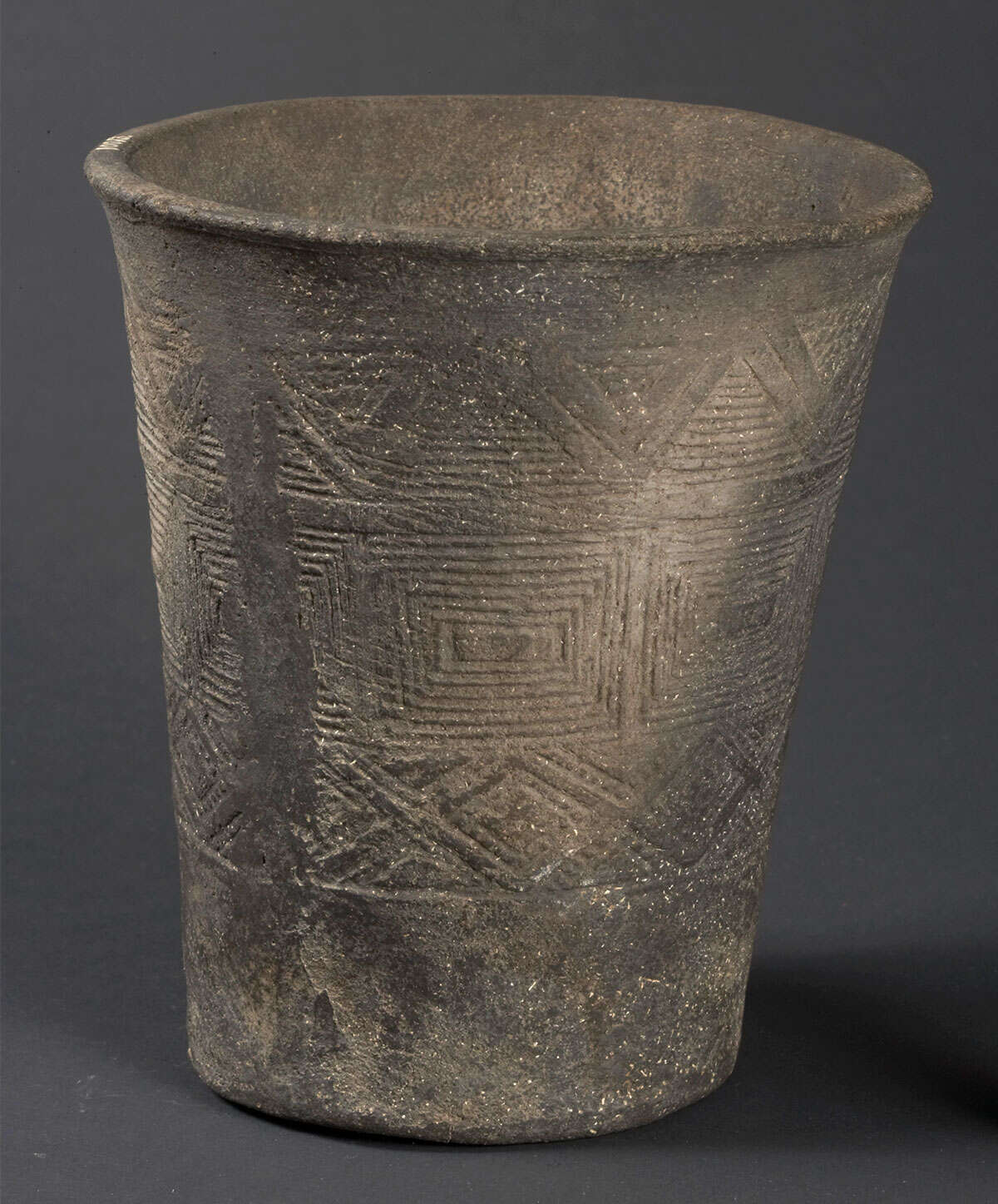
When the Inca defeated the Chimú around AD 1470, they took advantage of rich agricultural resources, infrastructure and a large population already organized to provide tribute to imperial rulers. This would explain that as long as the structure was upheld in accordance with Inca ideology, local variations were accepted. An example is the beaker UEM10013, produced at the North Coast and used for toasts with chicha in Inca feastings, which merges the typical form of an Imperial Inca keru with its geometrical design and the reduced firing of the local Chimú-tradition giving a grey or black surface.
See the full collection in the museum database Unimus