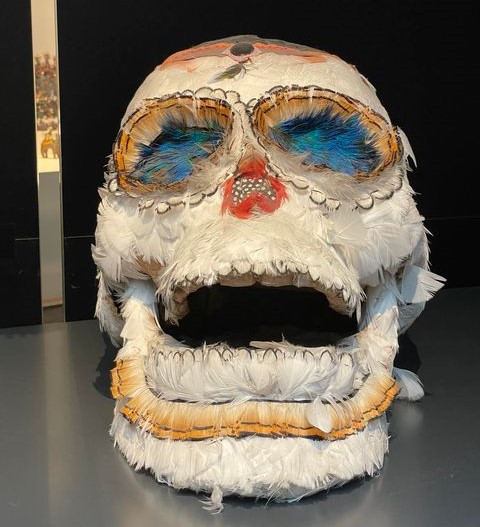
The paper will mainly draw on rich experiences from work related to exhibitions where human remains in some form or the other have been, or still is on display. This includes decorated human skulls from New Guinea, Egyptian mummies, a freeze-dried mummy and tzantsas from Latin America, and other material chosen for display or not. When relevant, descriptions of experiences and ongoing research practices undertaken by fellow museums are presented and used for comparison.
The presentation aims at exploring questions such as: What are considered human remains and by whom? And include cases about material that is considered human in some perspectives and far from human in others, due to what may be described as culturally specific perceptions and practices. Discussions about ways of understanding the ICOM code of ethics on this matter – human remains?
ICOM code of ethics 4.3: "Exhibition of Sensitive Materials Human remains and materials of sacred significance must be displayed in a manner consistent with professional standards and, where known, taking into account the interests and beliefs of members of the community, ethnic or religious groups from whom the objects originated. They must be presented with great tact and respect for the feelings of human dignity held by all peoples."
Ways of understanding ownership – including opinions and reactions from audience and so-called source communities will be briefly presented. It is also tempting to look again and highlight some of the reflections and cases used in an article Utstilling på liv og død on the same topic in KHM skrifter published in 1999.
Through experiences harvested from the many roles I have played in project groups for various exhibitions, mainly in this museum housing objects classified as Cultural historic, primarily from the Ethnographic collection. I humbly hope to bring some thought evoking experiences and reflections to the broad and never-ending discussion on the topic of human remains in museum-contexts.