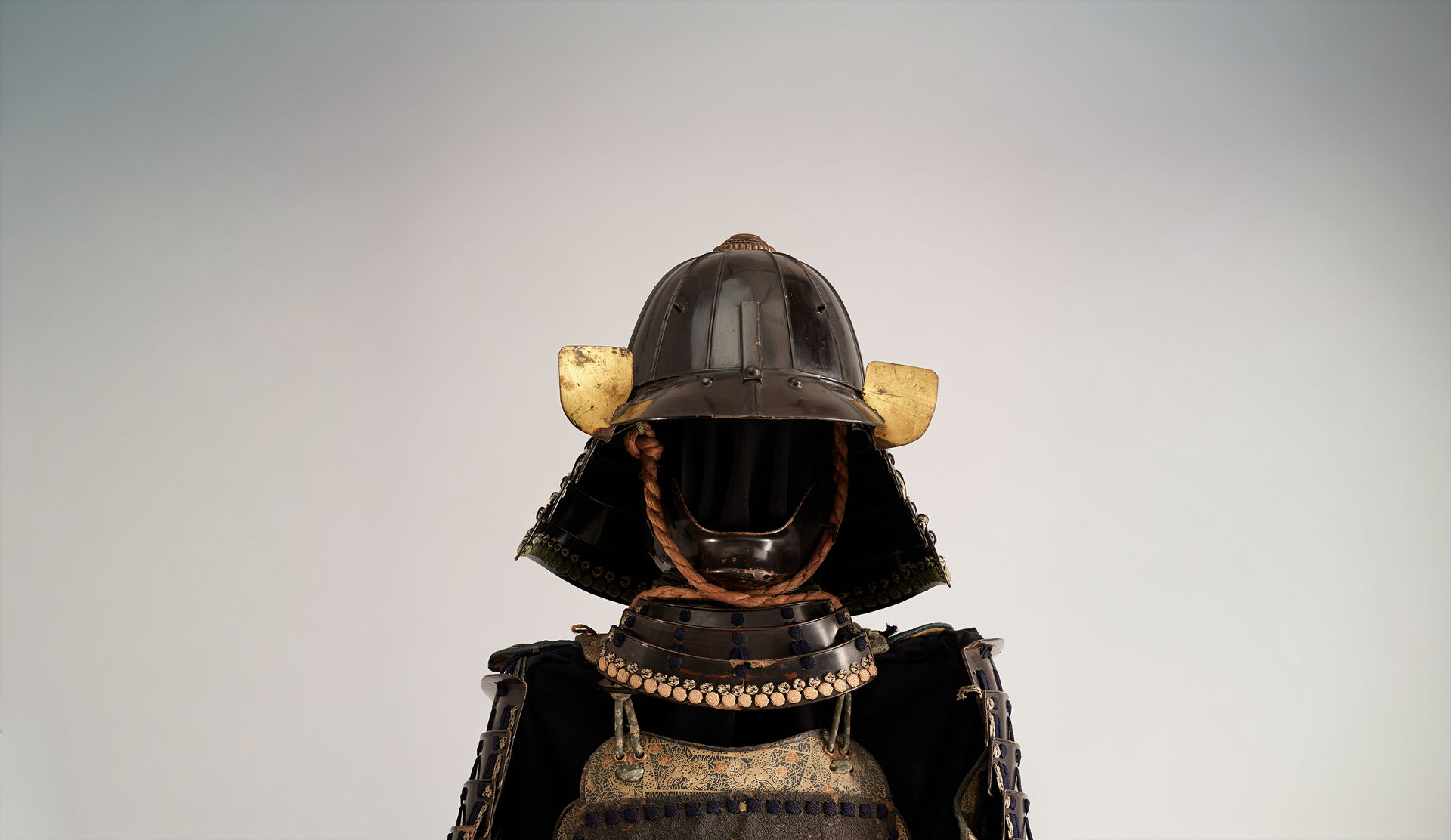
Helmet, kabuto
Made of 12 plates with ridges, sujibachi, meeting at a hole in the top, tehen. Surrounding the hole is a four-layered mount of copper, known as a tehen kanamono.
The helmet bowl including the peak and a holder for a helmet crest is lacquered black.
Neck guard, shikoro, made of four black lacquered plates, bound with dark blue braid, spaced in pairs, with one multicolored and one green lace on the lower plate.
The uppermost plate of the shikoro is turned back in deflectors, fukigaeshi, which are lacquered in gold.
The lining is intact; hence it is not possible to see if the bowl has a signature.
Helmet crest, maedate: Lacking.
Mask, hanbō
The mask is without nose, a type called hanbo, literally “half face”.
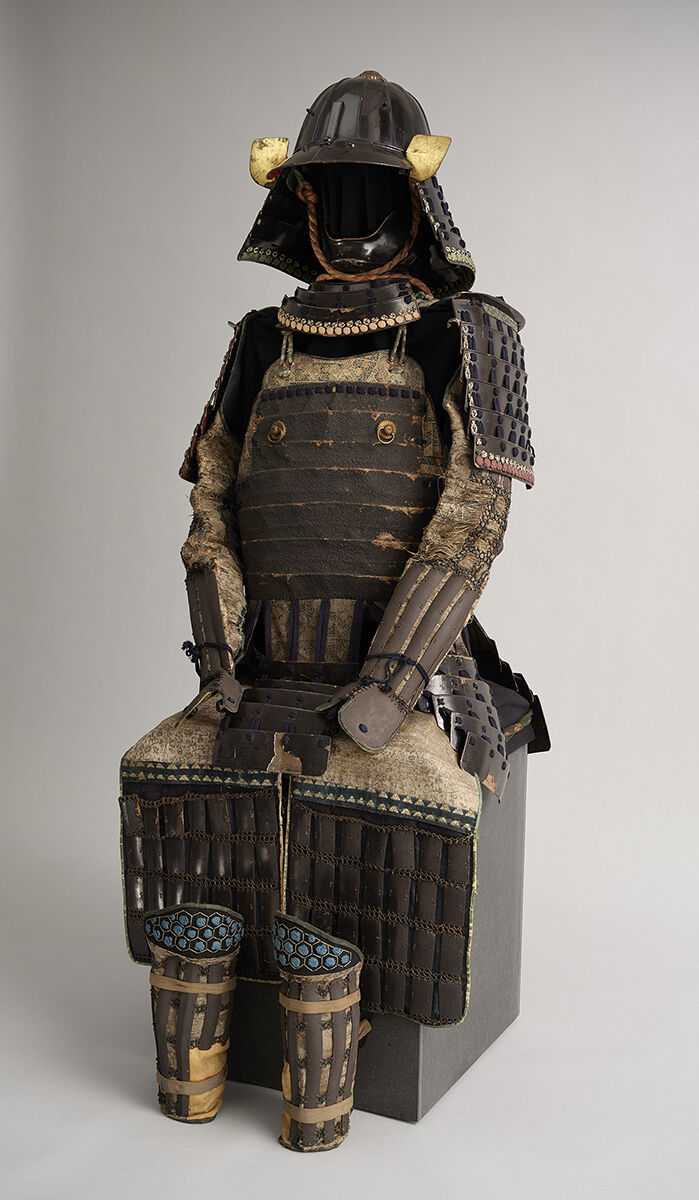
Cuirass, dō
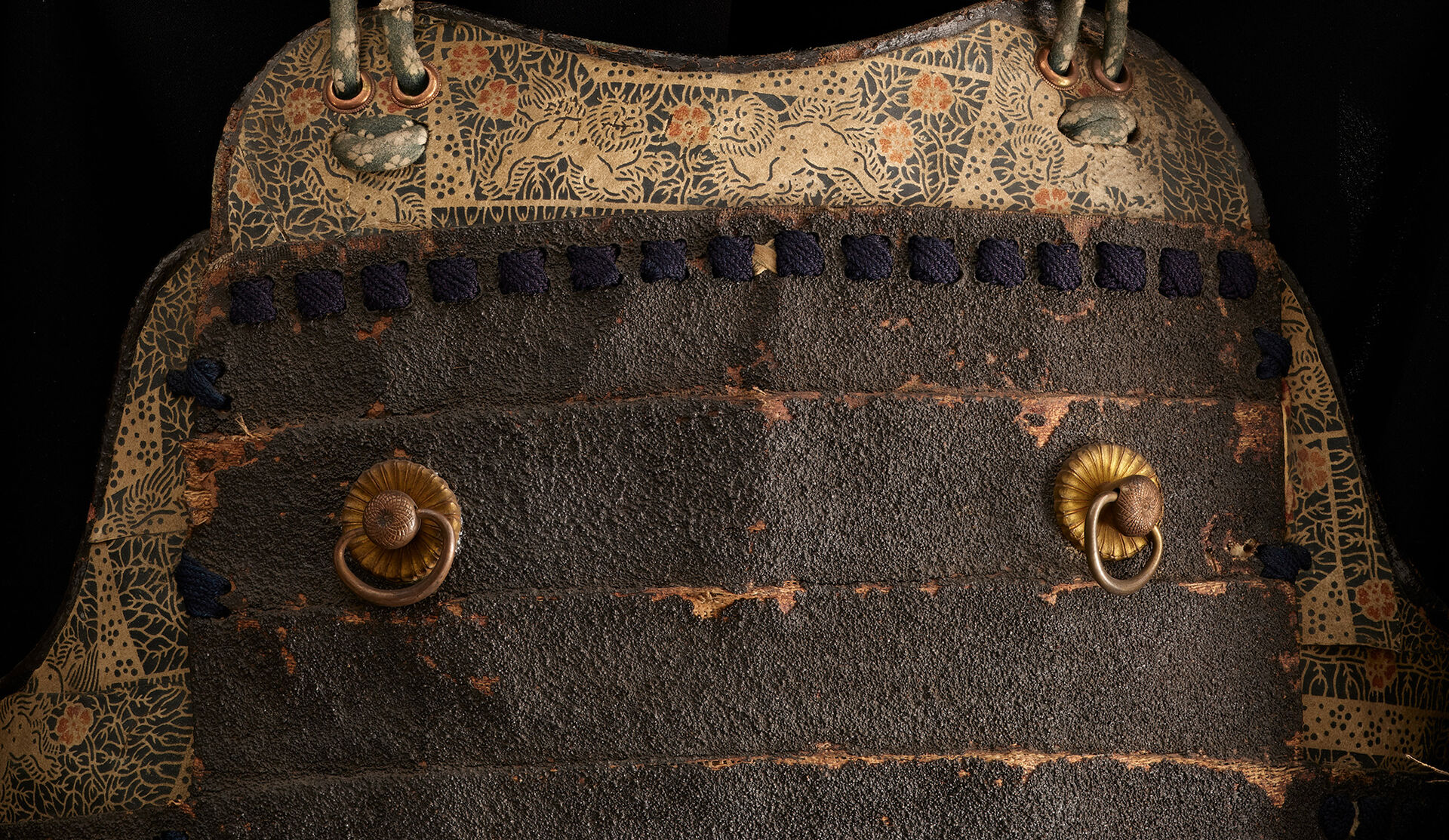
The cuirass is in two main parts, hinged on the left-hand side. Both the breastplate and the back plate are constructed of six horizontal plates made from thick canvas. This type of cuirass is called ni-mai (= two parts) yokohagi dō.
The canvas is covered in a textured, coarse grained brown lacquer, peeling in places.
On the upper plate a row of dark blue laces. On the second plate from the top there are two brass rings on flower shaped mounts, one ring to hold a commander’s baton, the other to hold a handkerchief. The top of the breastplate is decorated with suede leather with print.
Tassets, kusazuri: In four parts with dark blue lacing.
Shoulder guards, sode
The sode are made of small, black lacquered plates with dark blue laces in pairs.
Arm guards, kote
On the upper arm are four rows each of five vertical iron plates connected with chainmail, on the elbow a rosette shaped iron mount, on the lower arm five long vertical plates. The hand and thumb are covered by two iron plates linked together. All is mounted on worn brocade, dark blue cotton lining. The iron plates are lacquered sabi nuri. (The sabi nuri process involves applying layers of urushi lacquer mixed with iron filings or iron oxide powder to create a matte, antique, rust-like finish).
Skirt, haidate
Each side of the haidate has four times seven black lacquered iron plates mounted on worn brocade.
Shin guards, suneate
Made of vertical iron plates, lacquered sabi nuri. The plates are similar to those on the arm guards, but the lacing decoration is unique to the shin guards.