
When Japan opened up in the 1870s, after 250 years of self-imposed isolation, the world, and especially the West, discovered some of the wonderful treasures this tradition had created. Explorers, sailors, diplomats and trading travelers bought Japanese art and took it with them to their homelands. In Europe, Japanese aesthetics permeated architecture, art and culture, becoming important for the aesthetic movement we know as Art Nouveau.
The Japanese could sew, embroider, weave and braid beautiful fabrics, often in silk. They could forge and cast the strongest steel and the most beautiful copper alloys. And they could create perfectly lacquered surfaces long before anyone else knew what lacquer was.
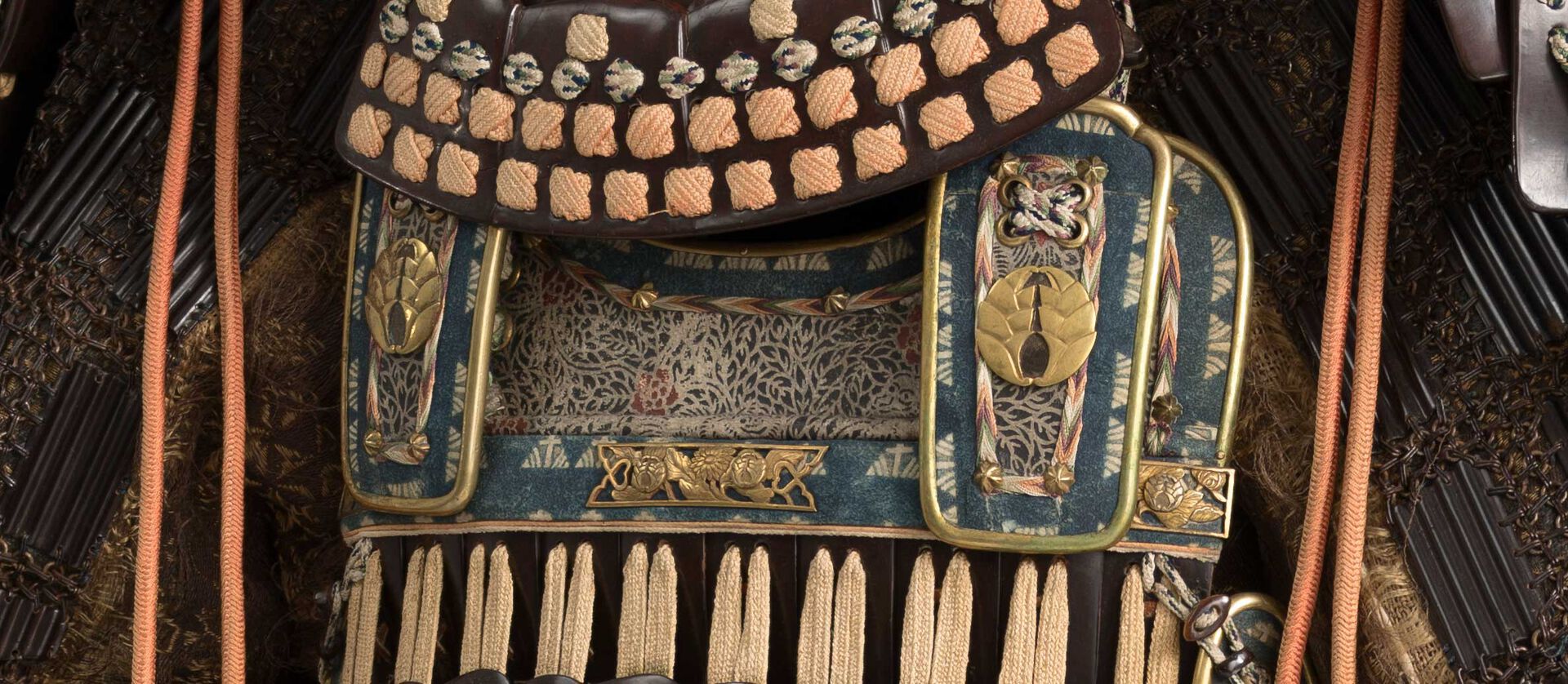
Samurai armor and swords have a special expression in the way they unite many craft traditions. Not only are the fabrics beautifully decorated, the metal detailed forged, and the lacquer applied delicately and perfectly.
Perhaps most impressive is the way the different materials and techniques are brought together into an aesthetic and functional whole.
A samurai armor is a garment weighing up to 25 kilograms that is soft and flexible enough to be worn by a rider and at the same time provides protection against the sharpest swords.
Over time, the armor became mostly a richly decorated symbol of social status, and as such, craftsmanship and aesthetics became even more important.
The museum has 17 suits of armor and two sword sets. Explore this craft tradition in greater detail:

Suit of Japanese armor, gusoku
Read more about the armor.
(UEM18237) The helmet is signed HARUTA MITSU, making it a Haruta armor. This influential school of armorers was active in Nara from Muromachi times (1333-1573) and throughout the Edo period.
Photo: Alexis Pantos/Museum of Cultural History, University of Oslo

Suit of Japanese armor, gusoku
Read more about the armor.
(UEM18238) This armor came to the Ethnographic Museum in 1873, with the brief arrival history “gifted by Consul H. J. Hammer, Lillesand.”.
Photo: Alexis Pantos/Museum of Cultural History, University of Oslo

Suit of Japanese armor, gusoku
Read more about the armor.
(UEM18239) Possibly quite old armor, has been shot at with musket balls.
Photo: Alexis Pantos/Museum of Cultural History, University of Oslo

Suit of Japanese armor, gusoku
Read more about the armor.
(UEM18240) is a complete gusoku of very high quality. The armorer’s signature on the inside of the rear plate: JOSHU NO JU SAOTOME IYECHIKA which reads: Saotome (family name) Iyechika (personal name), living in Joshu.
Photo: Alexis Pantos/Museum of Cultural History, University of Oslo

Suit of Japanese armor, gusoku
Read more about the armor.
(UEM2896) This armor was purchased in 1873 by the Ethnographic Museum in Kristiania (Oslo). The helmet bowl is a 62-plate suji bachi.
Photo: Alexis Pantos/Museum of Cultural History, University of Oslo

Suit of Japanese armor, gusoku
Read more about the armor.
(UEM28992) Some damaged lacquer, but the armor is complete, and aesthetic details suggest that all parts stems from one original gusoku. The helmet bowl is signed and reads (with some uncertainty): “The master is(?) Naga, living in Inaba”.
Photo: Alexis Pantos/Museum of Cultural History, University of Oslo

Suit of Japanese armor, gusoku
Read more about the armor.
(UEM30572) This armor was a gift to Roald Amundsen when he visited Japan in 1927. The family symbol, mon, which is found on several parts of this armor shows two apricot leaves, gyoyo, known as a gyoyo mon.
Photo: Alexis Pantos/Museum of Cultural History, University of Oslo

Suit of Japanese armor, gusoku
Read more about the armor.
(UEM40659) The parts we have are of good quality, but the arm guards, kote, skirt, haidate, and the leg armor, suneate, are missing. Probably early Edo period.
Photo: Alexis Pantos/Museum of Cultural History, University of Oslo

Suit of Japanese armor, gusoku
Read more about the armor.
(UEM40680) Suit of Japanese armor.
Photo: Alexis Pantos/Museum of Cultural History, University of Oslo

Suit of Japanese armor, gusoku
Read more about the armor.
(UEM40681) Suit of Japanese armor.
Photo: Alexis Pantos/Museum of Cultural History, University of Oslo
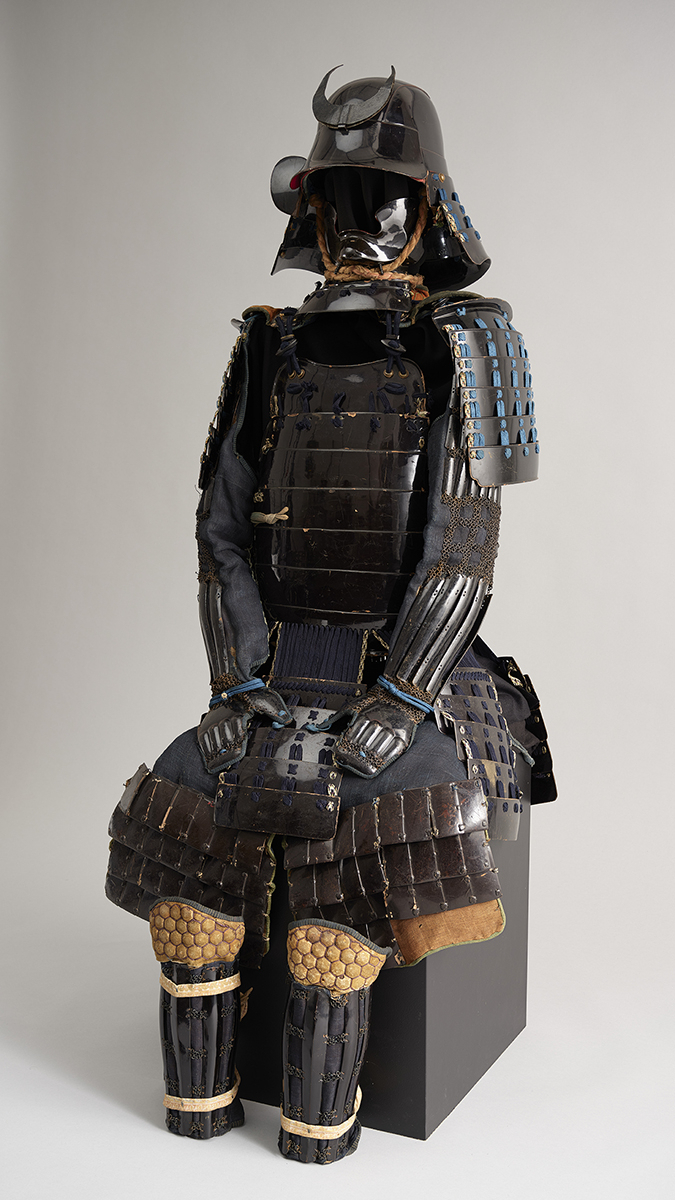
Suit of Japanese armor, gusoku
Read more about the armor.
(UEM40682) Suit of Japanese armor.
Photo: Alexis Pantos/Museum of Cultural History, University of Oslo
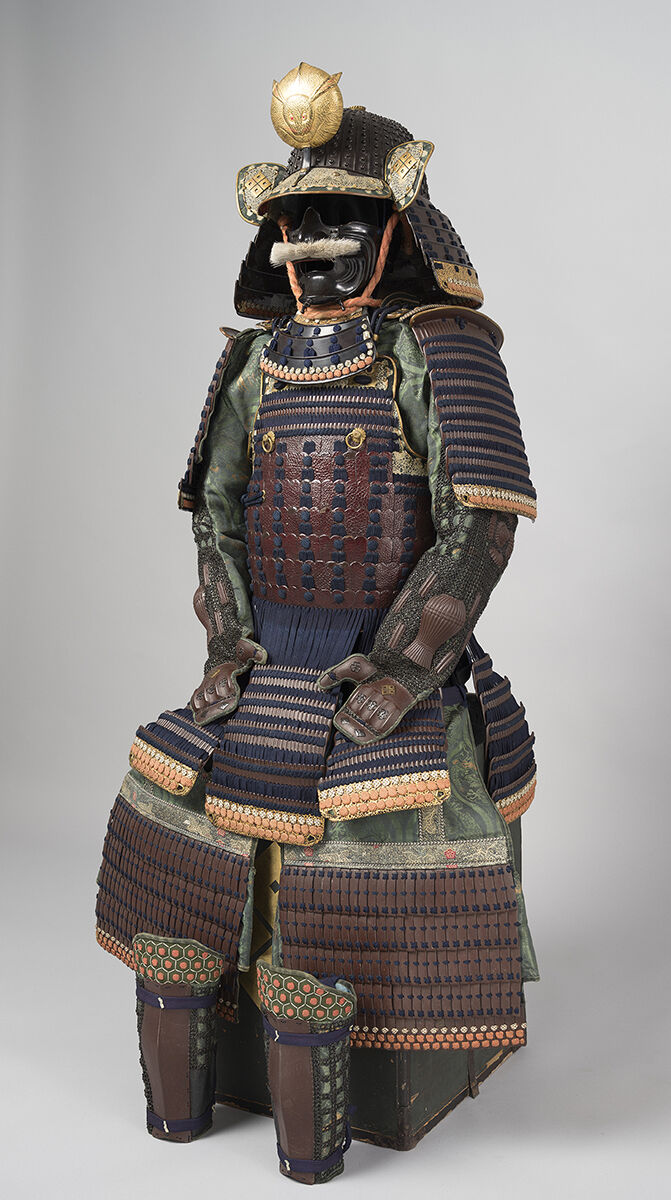
Suit of Japanese armor, gusoku
Read more about the armor.
(UEM41987) Suit of Japanese armor.
Photo: Alexis Pantos/Museum of Cultural History, University of Oslo

Suit of Japanese armor, gusoku
Read more about the armor.
(UEM49547) Suit of Japanese armor.
Photo: Alexis Pantos/Museum of Cultural History, University of Oslo

Suit of Japanese armor, gusoku
Read more about the armor.
(UEM49851) Suit of Japanese armor.
Photo: Alexis Pantos/Museum of Cultural History, University of Oslo

Suit of Japanese armor, gusoku
Read more about the armor.
(UEM6233) In the 1880s sailor Oliver Smith donated 450 objects to the Ethnographic Museum in Kristiania (now Oslo), including two suits of armor, which came to the museum in 1884.
Photo: Alexis Pantos/Museum of Cultural History, University of Oslo
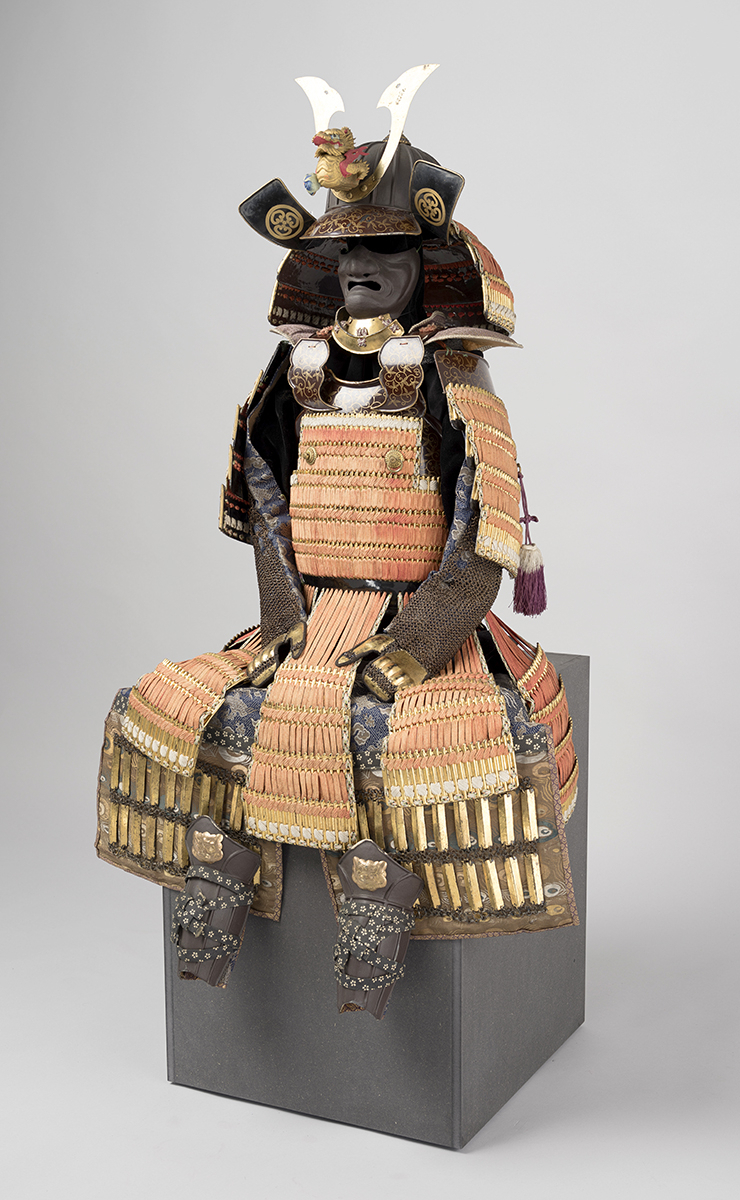
Suit of Japanese armor, gusoku
Read more about the armor.
(UEM6235) This is a complete suit for a boy, probably aged 8-10 years old. The metal-looking parts of this costume are made of light weight papier mâché.
Photo: Alexis Pantos/Museum of Cultural History, University of Oslo
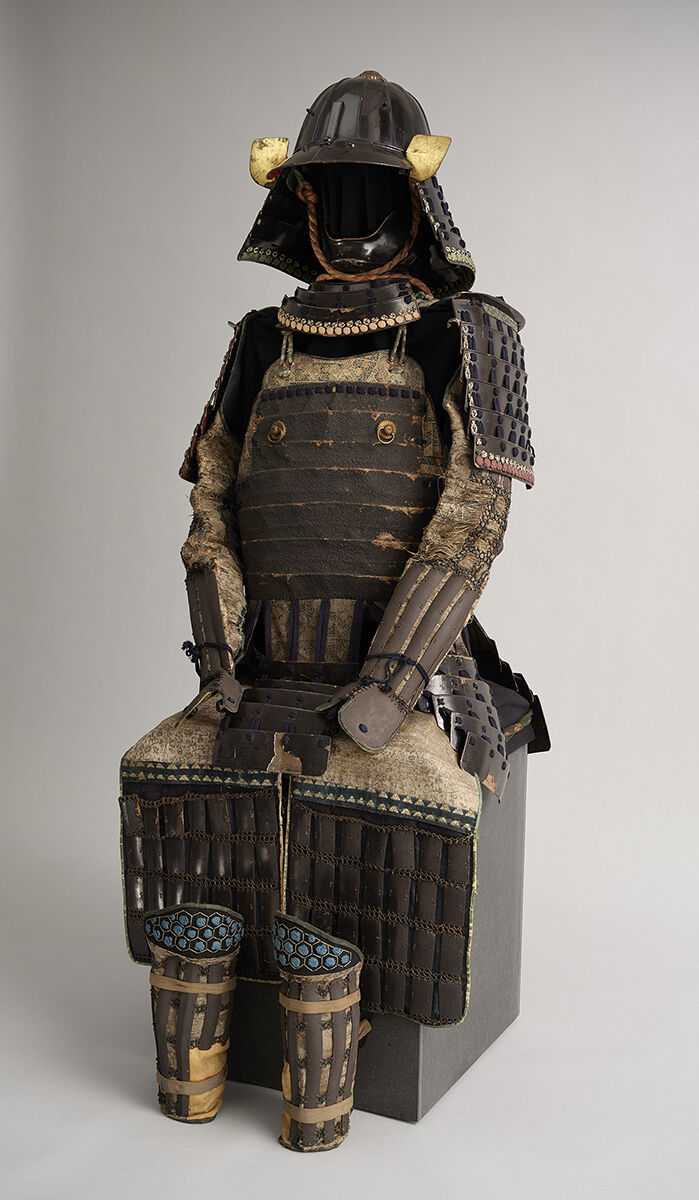
Suit of Japanese armor, gusoku
Read more about the armor.
(UEM891) This armor was purchased by the director of the Ethnographic Museum in Kristiania (Oslo), Ludvig Kristensen Daa, on a trip to England and Holland in 1864.
Photo: Alexis Pantos/Museum of Cultural History, University of Oslo
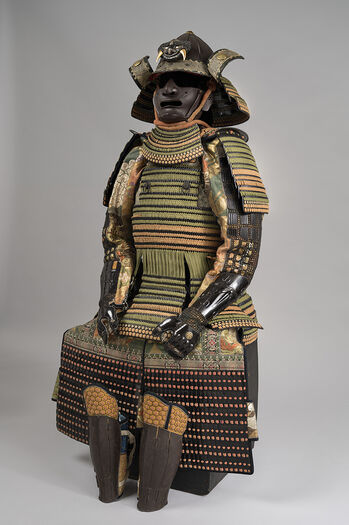
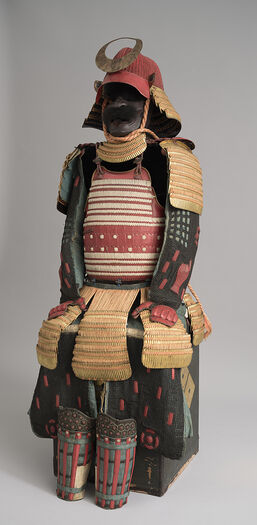
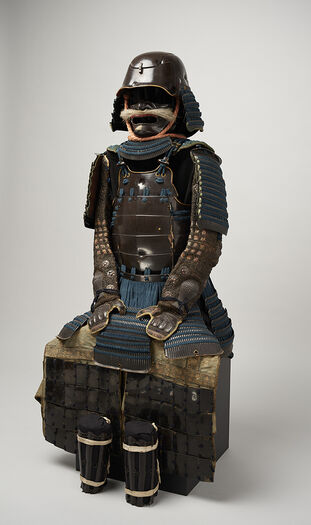
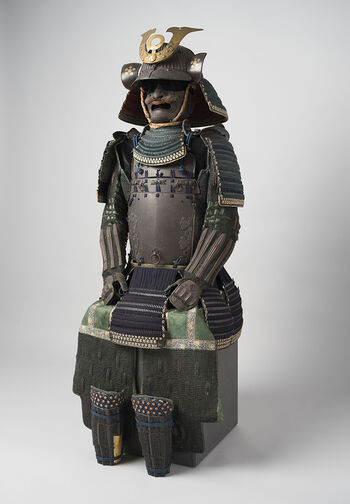

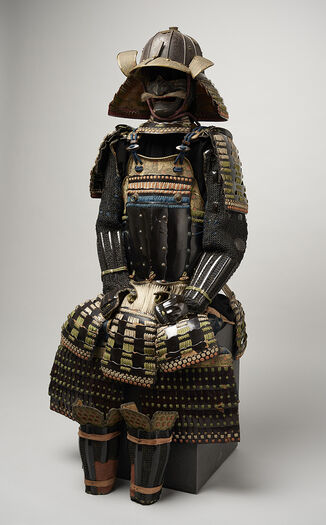
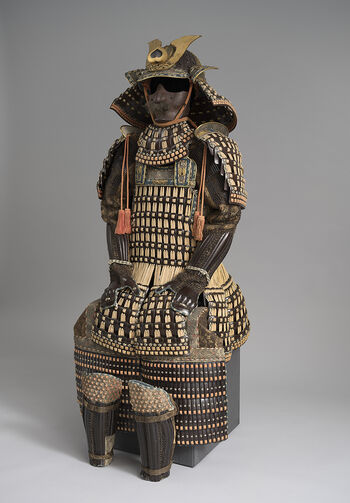
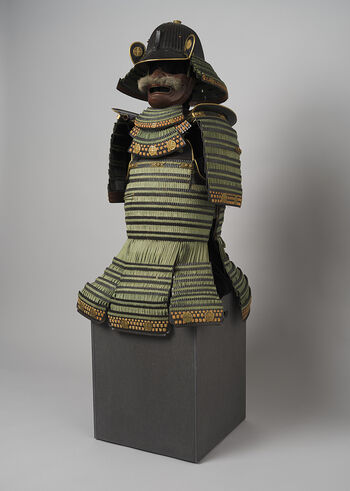

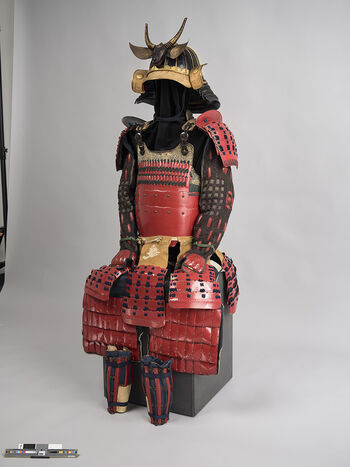
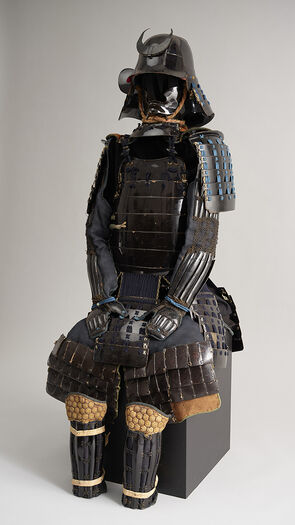
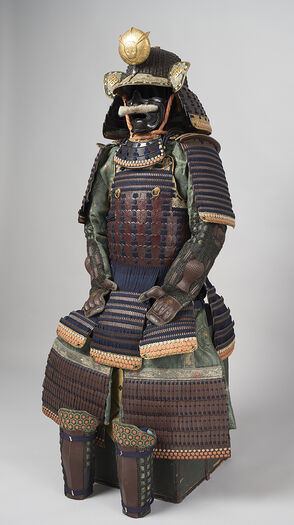
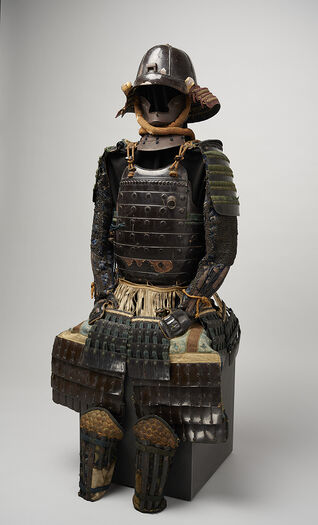
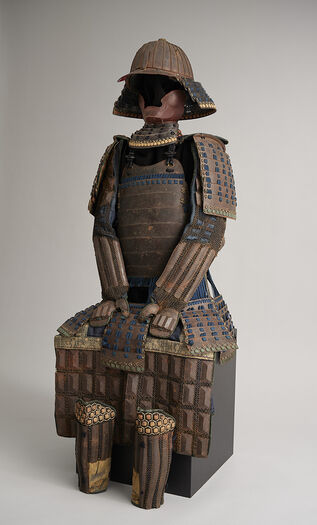
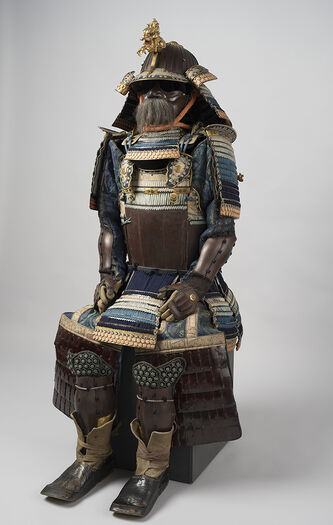

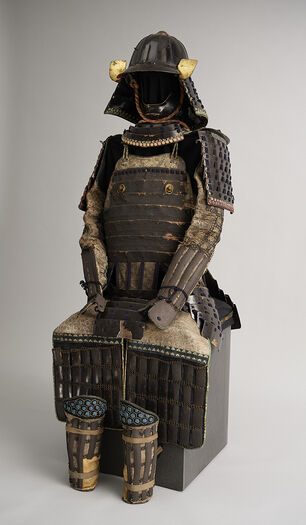
Gusoku
These armors are called gusoku. During the Sengoku period (1467–1603), the development of warfare and the introduction of European matchlock rifles created a need for more protective armor. This led to the development of Tosei Gusoku, which means “modern armor fully equipped with defensive functions.”
The samurai has been a myth-ridden figure for hundreds of years. The myths spin a world of realities and fantasies that are still very much alive today. The History museum in Oslo, which is a part of the Museum of Cultural History, opened the exhibition SAMURAI in the summer of 2023. It became one of the museum's most well-received successes, with over 80,000 visitors during the six months the exhibition was on display. The exhibition catalogue allows us to meet the samurai warrior as follows:
'Who was he, the legendary samurai through 1000 years of Japanese history? Was he the mounted warrior who charged towards the enemy, fired an arrow and galloped back to his comrades, yelling in excitement? Was he the lethal warrior with blood up to his elbows, and a cut-off head in each hand? Was he the armor-clad figure clashing his sword in combat with terrible force, or the scheming opportunist who changed side during a battle?
This was the samurai. He was a skilled and specialized warrior, who from a little boy was trained at climbing, horse riding and swimming, and to fight with different weapons – and without. He learned loyalty to his friends, to fulfil his duties to his superiors, to be ruthless in war and fight until death. He held pride and honor in high esteem. Therefore, the samurai was also the brave and dignified man, who wrote a death poem before entering a battle he knew he would lose or took his life in the most horrifying manner.'
(Samurai, Anne Håbu and Per Terje Norheim, 2023)

From warrior to civil servant
Before the Edo period, the samurai were a warrior class loyal to their local lord, the Daimyo, but also had local power as both soldiers and landowners. During the Edo period, from the early 17th century to 1868, the samurai became part of Japan's feudal state. They ceded their former military power to the country's military leadership, the Tokugawa shogunate, which largely ruled the country. Many samurai retained their rights to land, but some also became salaried civil servants in the new state apparatus, without rights to land.
With the Edo period, gender roles changed in Japan. The country had been fairly male dominated even before. But women had participated in war, and the female warrior, Onna-musha, had occasionally fought alongside the men. This gave women the perhaps dubious honor of dying in war, but with it they gained both a certain autonomy, and some role images – in the form of mythical warriors – as proud and independent.
As part of the patriarchal state apparatus, there was less room for such mythical women, and women were given a more unambiguous role as housewives.
It was also during the Edo period that armors took on a greater symbolic than practical significance, to be used in parades rather than in war. They now became increasingly ornate, although the practical element never completely disappeared. The armor should still be fully functional, as the samurai must always be prepared to go to war if needed.
With the abolition of the feudal class system in 1868, as many as 400,000 samurai families lost their status as Samurai, and the armor lost its direct symbolic value. Many ex-samurai then sold their armor, and often also the symbolic sword.
Popular collectibles
In the West, the suits of armor became popular collectibles, and the Ethnographic Museum in Oslo, now the Museum of Cultural History, eventually acquired a large collection. The size of the collection is not determined by a strategic decision. It just happened that way. Norway is a seafaring nation, and many sailors, diplomats and travelers to Japan bought or received as gifts one or more suits of armor. Many later donated them to the Ethnographic Museum.
Most of the museum's 17 suits of armor date back to the 19th century, with some coming to the museum as early as 1870, while others were in private ownership before being donated to the museum..
Some of the museum's suits of armor are complete, richly decorated and in perfect condition, a couple of them are quite worn, and some of them are probably assembled from what were originally several suits of armor.