
The Swedish linguist Jacob Jonas Björnståhl (1731–1779) spent three years in Istanbul, 1776–1779, and documented his observations in a diary and many travel letters which were published promptly when they reached Stockholm, Sweden. This correspondence was aimed for a qualified readership and soon appeared in German, Dutch and Italian translations. Björnståhl’s writings constitute a starting point for a Nordic academic interest in Islam and, unique for his time, with a distinctive emphasis on religious practices. Hence ritual spaces such as mosques and Sufi lodges play an important role in his writings.
Björnståhl was a learned writer, and the references in his work are exponents of the wide circulation of ’Turkish letters’ and other genres of travel literature. He displayed a special admiration for Lady Montagu with whom he shared the ambition to speak Turkish, made personal visits to people and places, criticizing previous travel accounts for repeating information without any effort to check the conditions in situ and the habit of wearing local dress. Björnståhl energetically mediates information from the sultan’s empire and builds up his authority as an ‘eyewitness’, to use the writer’s own phrasing.
This presentation discusses how Björnståhl constructs a persona in his letters to give legitimacy to his observations. He declares his ambition to be “a European Traveller who wishes to write nothing but what he has seen, and what he knows for certain to be true”. As a man of the Enlightenment, his accumulative understanding of knowledge production dominates the letters; nonetheless, Björnståhl depicts Muslim world by means of comparisons, metaphors and analogies in ways that go beyond travel writing as a literary genre and point to the development of contemporary disciplines like the study of religion, ethnography and linguistics.
About the lecturer
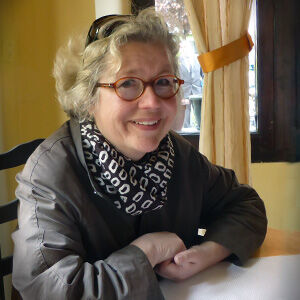
Catharina Raudvere is a professor of the history of religions at the Department of Cross-Cultural and Regional Studies, University of Copenhagen.
Raudvere has researched women in Sufism, with a particular focus on the Zikir tradition in Istanbul, Turkey. She has also conducted extensive research in the Balkans, emphasizing social/collective memory and issues related to cultural heritage.
In her work, she emphasizes the long Muslim history of Turkey and the Balkans and the forms of Muslim lifestyles that have developed in multi-religious societies and environments characterized by long-standing secular social structures.
Gutorm Gjessing Lecture Series
The lecture series celebrates the scholarship of Gutorm Gjessing, renowned archaeologist and anthropologist and Head of the Ethnographic collections for a quarter of a century (1947–73).