Research on cultural heritage involves the intersection of material objects and multidisciplinary studies, serving as a platform for generating collective knowledge.
In the digital age, this intersection provides an ideal framework for the collective analysis and interpretation of facts, objects, and phenomena, facilitating the creation of new scientific and cultural resources – our heritage of tomorrow. How can we document the diverse perspectives focused on the same object of study? How do we analyze their dynamic interactions, overlaps, and fusions to generate new knowledge?
Our research introduces a novel field – a territory of n-dimensional and multidisciplinary scientific resources – as a foundational element for studying the mechanisms of knowledge production in heritage science. Introducing an innovative approach in computational modelling and digitisation, we leverage the Notre-Dame de Paris scientific action, which includes contributions from archaeology, anthropology, architecture, history, chemistry, physics, and computer science, to build and analyse a comprehensive data corpus on scientific practices built around a common denominator.
Our goal is to shift the focus from merely digitizing physical objects, to unveiling and analyzing the interplay between the complex characteristics of the material objects and the objects of knowledge developed by researchers through their practices.
Location
The lecture is held in the Lecture Hall at the Historical Museum. You can also follow it online using the following Zoom-link: https://uio.zoom.us/j/68930069699
About the lecturer
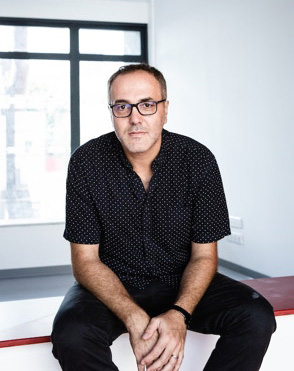
Livio De Luca is research director at the CNRS MAP Laboratory. The laboratory develops innovative methods and tools for the acquisition, modeling and semantic enrichment of digital representations of heritage objects. De Luca is a leading researcher in the field of digital heritage, combining his expertise in architecture, engineering and computer science.
He is also the co-president of the international congress UNESCO/IEEE/EG DigitalHeritage, the coordinator of the working group on digital data for the restoration of Notre-Dame de Paris, and the recipient of several prestigious awards, such as the CNRS Innovation Medal and ERC Advanced Grant. He served as the General Co-Chair of DigitalHeritage between 2013 and 2015.
De Luca's work has a strong impact on the scientific, cultural and social aspects of heritage preservation and valorization.
Gutorm Gjessing Lecture Series
The lecture series celebrates the scholarship of Gutorm Gjessing, renowned archaeologist and anthropologist and Head of the Ethnographic collections for a quarter of a century (1947–73).