Programme
18.00–18.10: Hartmut Kutzke: opening and introduction
18.10–19.00: Nicholas Eastaugh: How do we know The Scream is real? Science and AI analyse authenticity and attribution in art
19.00–19.10: Short break
19.10–19.40: Summer Rose Austin: From Looting to the Laboratory: The Science of Heritage Crime
19.40–19.45: Hartmut Kutzke: Closing remarks and presentation of planned activities on Historical Museum Saturday 26 September
Nicholas Eastaugh: How do we know The Scream is real? Science and AI analyse authenticity and attribution in art
None of us stood beside Munch as he painted The Scream, so how can we be certain the work we see today is truly by his hand? When the Mona Lisa was stolen in 1911, dozens of “originals” surfaced, so what allows us to trust the one in the Louvre? These questions open the door to the rapidly evolving world of scientific art authentication, where we look beyond style and brushwork to examine the physical and chemical fingerprints of an artwork.
In this lecture we will explore how new technologies, from advanced imaging and materials analysis to AI driven interpretation, are transforming our ability to investigate authorship, detect forgeries, and understand how artworks were made. We will look at what these methods reveal about iconic objects such as The Scream, and how they reshape our understanding of cultural heritage. In the process we will uncover stories hidden within the materials themselves, stories that deepen art history, challenge long held assumptions, and illuminate the complex relationship between artists, objects, and authenticity.
About the lecturer
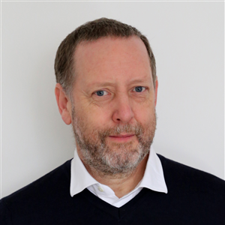
Dr Nicholas Eastaugh originally trained as a physicist before going on to study conservation and art history at the Courtauld Institute of Art, London, where he completed a PhD in scientific analysis and documentary research of historical pigments in 1988. Since 1989 he has been a consultant in the scientific and art technological study of paint and paintings. A frequent lecturer, he was an Honorary Visiting Research Fellow at the University of Oxford 2003–2017.
In 1999 he co-founded the Pigmentum Project, an interdisciplinary research group developing comprehensive high-quality documentary and analytical data on historical pigments and other artists’ materials. This led to the publication of the Pigment Compendium in 2004, which quickly became a standard reference text in the field. Dr Eastaugh founded Art Analysis & Research in 2009, a company specialising in scientific studies of artworks, and he is now CEO of Vasarik, where they are developing novel data-driven solutions to art historical problems.
Summer Rose Austin: From Looting to the Laboratory: The Science of Heritage Crime
Scientific analysis has long played an important role in the study and trade of cultural objects. High-profile cases involving the detection of forgeries, the identification of overlooked masterpieces, and, more recently, the use of scientific evidence to support restitution claims demonstrate the potential of scientific techniques to expose deception, correct the historical record, and redress past harms. At the same time, scientific techniques have been used to facilitate illicit trade, for example through conserving and restoring looted objects, which erases evidence of their origins while enhancing their market value. Despite the important role that science has in the market for cultural objects, it remains significantly under-researched.
This talk examines the role of scientific analysis in heritage crime, considering how it has historically been used both to combat and facilitate the illicit trade in cultural objects, and how it operates within today's market. It explores how different actors understand and deploy scientific evidence, before considering its potential criminogenic exploitation, including its use in the laundering of cultural objects. Finally, it examines how scientific analysis can be more effectively deployed to identify illicit objects, challenge fraudulent claims, and combat the illicit trade in cultural heritage.
About the lecturer

Dr Summer Rose Austin is an archaeologist specialising in heritage crime. She obtained her PhD from University College London’s Institute of Archaeology, where her research investigated the relationship between blockbuster museum exhibitions and increased market demand for cultural objects. Her research provided the first empirical evidence demonstrating that phenomenal museum exhibitions generate market demand which, in turn, incentivise the looting and trafficking of cultural objects. She is also co-editor of the Springer Law volume Researching a Rigged Game: Digital Approaches to Tracing the Illicit Trade in Cultural Objects, which brings together academics, practitioners, and law enforcement to examine digital methods, ethics, and regulation in researching the illicit trade. Summer has published on offender motivations in art crime, methodologies for investigating illicit objects, and reflections on the field of heritage crime research. Her research interests include the art and antiquities market; looting and trafficking of cultural and natural resources; museums and the market; the ethics of display; ownership, control, and commodification of heritage; and national and international heritage governance.
26 September: See how we analyse works of art and archaeological objects
Meet the researchers from the museum’s SciCult analysis laboratory and discover how science can reveal hidden details in museum objects!
Time and place: Saturday, 26 September, at the Historical Museum, Frederiks gate 2
Our researchers will demonstrate instruments used to analyse works of art and archaeological objects. See portable XRF and FORS instruments in action. These non-invasive methods make it possible to examine objects without taking samples or causing damage. XRF reveals which chemical elements are present in the material, while FORS can help us identify materials such as pigments and dyes by analysing how they respond to light.
The National Science Week 16–27 September
From 16 to 27 September, researchers all across Norway are opening their doors and inviting you to discover what we know—and the many questions we are still working to answer. Research Days is a festival organised by the Research Council of Norway.