Hartmut Kutzke
 Hartmut Kutzke works as chemist and heritage scientist at the Museum of Cultural History, University of Oslo. After studies in chemistry with the major subjects biochemistry and mineralogy/crystallography, and further studies in oriental art history and archaeology, he obtained a doctoral degree from the University of Bonn with a thesis on organic crystals of historical importance. He was employed in different exhibition and research projects covering various aspects of cultural history and heritage science, before he joined the museum in 2007.
His main research interests are analyses of materials used on art and archaeological objects, studies of written sources on art technology and their reproduction in the laboratory, investigation of jewellery, metals, gemstones and their imitations, pigments and dyestuffs, development of bio-inspired conservation materials, and the role of colours, minerals and gemstones in cultural history. Analytical techniques he is most familar with are those related to crystallography, i.e. IR and Raman spectroscopy, and XRD. And as all members of the group, he is very much interested in exploring new ways in science communication.
Lavinia de Ferri
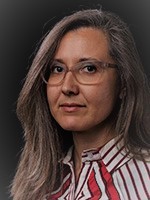 Lavinia de Ferri is an heritage scientist working at the Museum of Cultural History, University of Oslo, since September 2020. She graduated in Science for Concervation of Cultural Heritage at the University of Parma and had her PhD at the University of Modena and Reggio Emilia studying the structure of weathered historical window glass and sol-gel based coatings for their protection.
Before joining the Museum of Cultural History, she worked as Post-doc in several universities (Politecnico di Milano, University of Parma, Ca’ Foscari University of Venice, Norwegian University of Science and Technology) applying different analytical techniques for diagnostic purposes on artworks and archaeological items.
She is mostly specialized in vibrational and electronic spectroscopy, but has also experience in colorimetry, XRD, imaging techniques, DRIFT, HPLC and acoustic emission for the study of several materials such as natural and artificial stone materials (stones, glass, ceramics, faiance, mortars, plasters) mobile paintings, frescos, pigments, textiles (dyes and fibres) and wood.
Calin Steindal
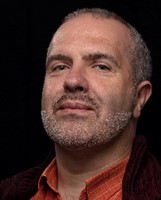 Calin Steindal holds a B.Sc. in biochemistry, a M.Sc. in analytical chemistry, and a PhD degree from the University of Oslo in the field of organic chemistry. After working as a researcher within organic synthesis, he joined the Museum of Cultural History, University of Oslo, in 2013 as a lab engineer, and then as researcher. He is conducting research on silicone-based conservation materials for archaeological wood in the Saving Oseberg project, along with applying several analytical techniques in wood characterisation.
He primarily specializes in chromatographic techniques (GCMS, LCMS) and has substantial experience in SEM-EDS, XRF, FTIR, XRD, and Raman. He has analyzed a wide variety of materials and has also been responsible for maintaining the instruments used in these analytical techniques.
Susan Braovac
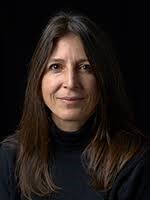 Susan Braovac holds a bachelor degree in biochemistry from McGill University, Montreal, Canada (1989) and a Master degree in Object Conservation from Queen's University, Kingston, Canada (1993). In 2015, she obtained a PhD on the deterioration and re-conservation of alum-treated wood through the School of Conservation, Copenhagen. Since 1995, Susan worked as a conservator at the Museum of Cultural History, University of Oslo. Currently she participates in the Saving Oseberg project as a conservation researcher.
Her main interests are conservation of archaeological wood, research into the deterioration of alum-treated wood, and climate in museums.
Angeliki Zisi
 Angeliki Zisi works as an archaeological conservator at the Department of Collection Management at the Museum of Cultural History, University of Oslo, which she joined in 2018. She holds a B.Sc. in Conservation of Antiquities and Works of Art from the University of West Attica in Greece (2005) and a PhD from the University of Southampton in the UK (2016) on the use of non-destructive ultrasound as a tool with practical applications in the fields of wood conservation, maritime archaeology, in situ heritage preservation, geophysics and wood science. Following a course in wood identification at the Jodrell Laboratory in Kew Gardens (UK), she worked as a research visitor on the identification of waterlogged woods from underwater archaeological excavations in Greece, Bulgaria and the UK. A short-term placement as a research assistant for the lab followed.
Her research focus is on various aspects of wood from different burial environments, as well as how to secure a safe environment for objects in museums exhibitions and storage (Oddy test, etc). She is component with use of SEM, FTIR and light microscope, and continues to develop her competence in wood and charcoal identification.
Kaja Kollandsrud
Kaja Kollandsrud holds a diploma in Conservation of Painting on Canvas and Wood from the University of Oslo (UiO), 1992 and a PhD in History of Art from Department of Philosophy, Classics, History of Art and Ideas, UiO in 2018. Before joining the Museum of Cultural History in 1998, she worked as a conservator of paintings and polychrome sculpture at the Directorate for Cultural Heritage in Oslo, the Historical Museum in Stockholm, University Museum of Bergen, the Norwegian Institute for Cultural Heritage Research and the National Gallery in Oslo.
Kollandsrud’s research centers around medieval gilding and painting techniques, their application, materiality, trends in their use, and visual expression. Her research focusses on the visual vocabulary of medieval church art. The search for meaning opens the doors to the medieval cosmos and its colour perception, using perspectives from philosophy, theology, cultural anthropology, history of the sciences, and litterature. Kollandsrud has also contributed to the reconstruction of medieval gilding and painting methods based on scientific analyses, using the reconstructed image to show the dynamic effects produced when the painting first came out of the medieval painter’s studio.