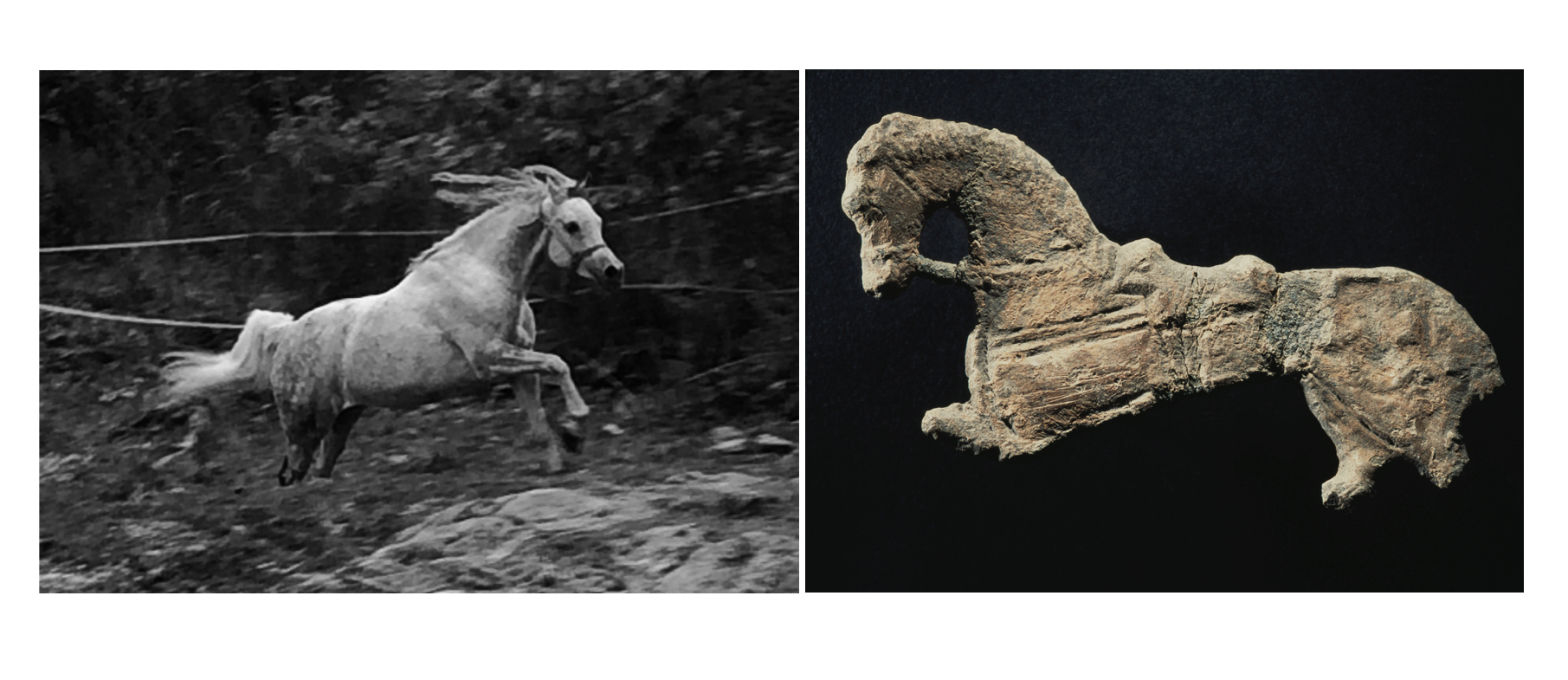
In the history of horse and human interactions, humans have trained horses for purposes that could advance their mobility in cultural encounters. The horse increased the status of the human by representing power, wealth, fertility and a mythical affiliation. Together, horse and human performed as an interconnected system. Movements, exercises and communication were shaped by the demands of warfare, ritual, and procession. Tack was designed to ease the communication between human and horse.
The research group The Horse presents their current work on the large collection of archaeological and art historical horse objects at the Museum of Cultural History, and invites two horse experts to share their perspectives on historical horse performances as well as contemporary equine movement science and physiology.
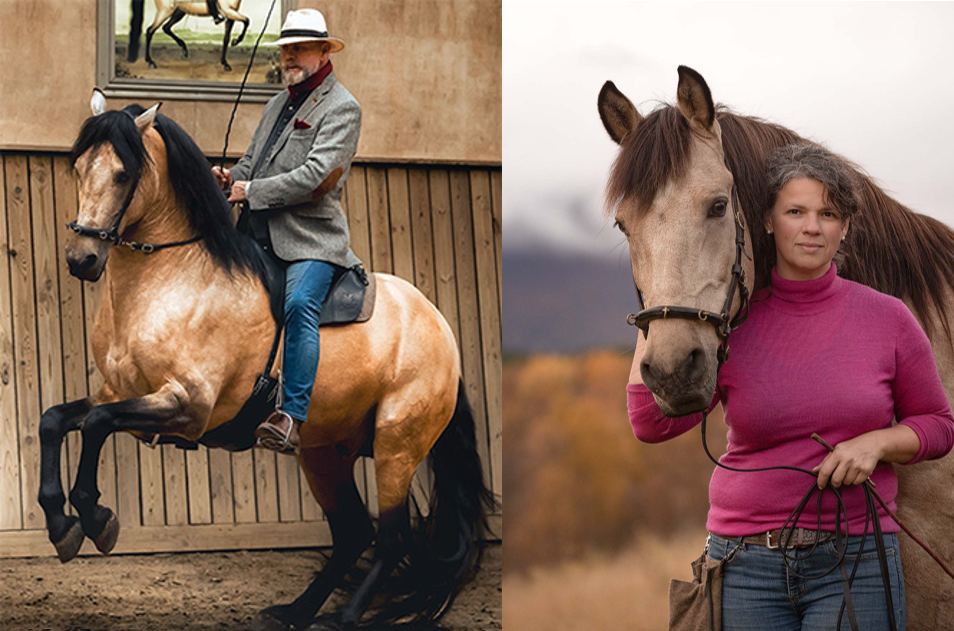
Bent Branderup shares perspectives on the development of postures and movements for war and processions.
Celina Skogan focuses on how tack and training techniques influence locomotion, posture, breathing mechanics, and the horse’s spinal system.
Practical information
The seminar is open for all interested! The event is free of charge, but please register in advance to secure your place.
Tune in online, no registration required.
About the speakers
Bent Branderup is professional horse trainer and the founder of Academic Art of Riding – dressage based on historical sources and in continuous development with current research on horse physiology and behavior.
Celina Skogan is professional horse trainer, horse physiologist and the founder of Equidemia – a web-based platform for intersecting science and practice in the horse sector.