As state memory institutions, museums are important sites for reconciliatory exercises. In the museum, repatriation is a core reconciliatory measure. In Nordic countries repatriation is an existing practice. MORE explores and continues reconciliation practices in museums. In the period 2012-2019, a collaboration consisting of 6 Sámi museum institutions, the Sámi Parliament and the capital museums, Norsk Folkemuseum STI and the Museum of Cultural History (UiO), returned half of its' Sámi collections to the Sámi museums on the Norwegian side. In 2019, ownership of the collections were transferred. The repatriation was named Bååstede, meaning ‘Return’ in Southern Sámi. But does repatriation necessarily bring us closer to reconciliation?

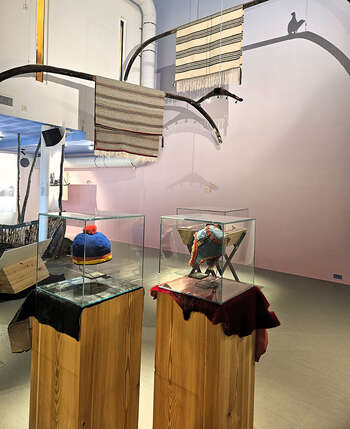
The rátnu in the new exhibition 'De čalbmi ii olat guhkibuidda/When the eye no longer sees'.
Photo: Center of Northern Peoples
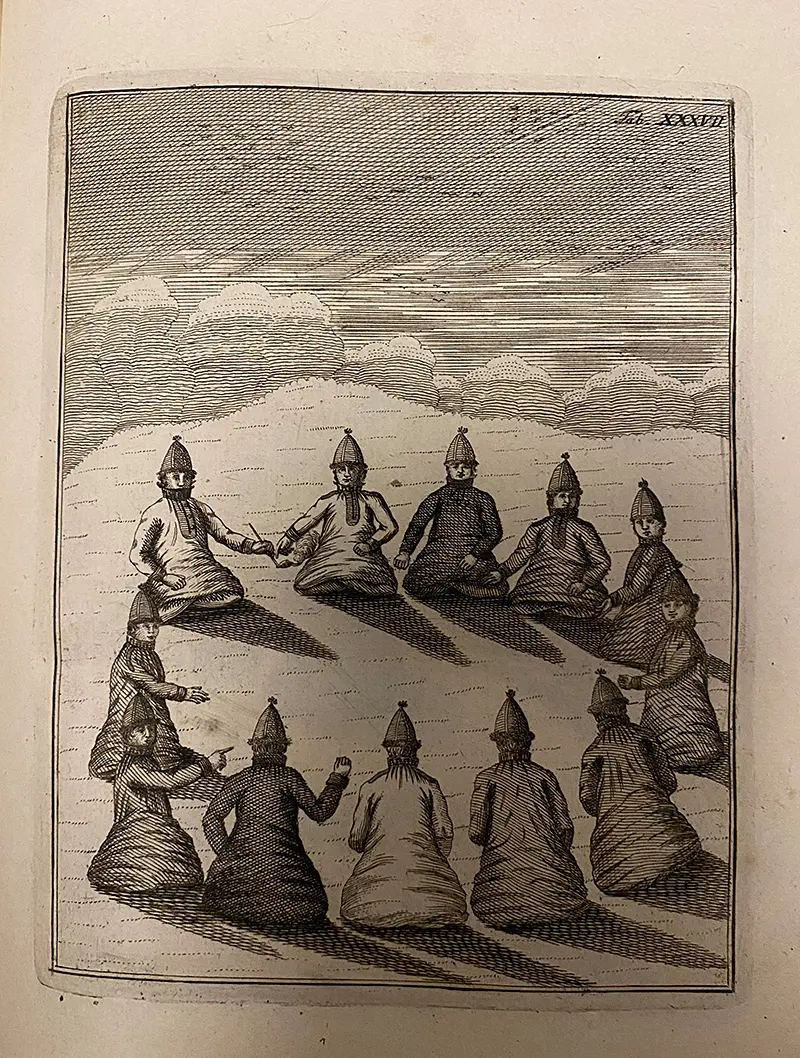
On whose premises are the history of Sápmi written? 'Migration' etching by Odvardt Helmholdt de Lode for the priest Knud Leem's Description of Finmarken Laps, their Language, Ways of Life and past Idolatry' from 1767.

Artefacts with barcodes in the Folkemuseet storage photographed during visit in the early days of the Bååstede repatriation.
Photo: Gro Ween/Museum of Cultural History, University of Oslo

Copy of the noidi Paola Ánde, Anders Paulsens drum, returned from the Nationalmuseet in Denmark to Sámiid Vuorká-Dávvirat in Kárášjohka (RDM). The copy (UEM48236/3) was made for the Kulturhistorisk museum by Ingvald Guttorm. Currently, it is exhibited in 'Heritage – Our Place in History' at Historical Museum (which is part of the Museum of Cultural History).
Photo: Gro Ween/Museum of Cultural History, University of Oslo

XRF testing of pesticide levels in a ladjogahpir. Norsk Folkemuseum.
Photo: Gro Ween/Museum of Cultural History, University of Oslo
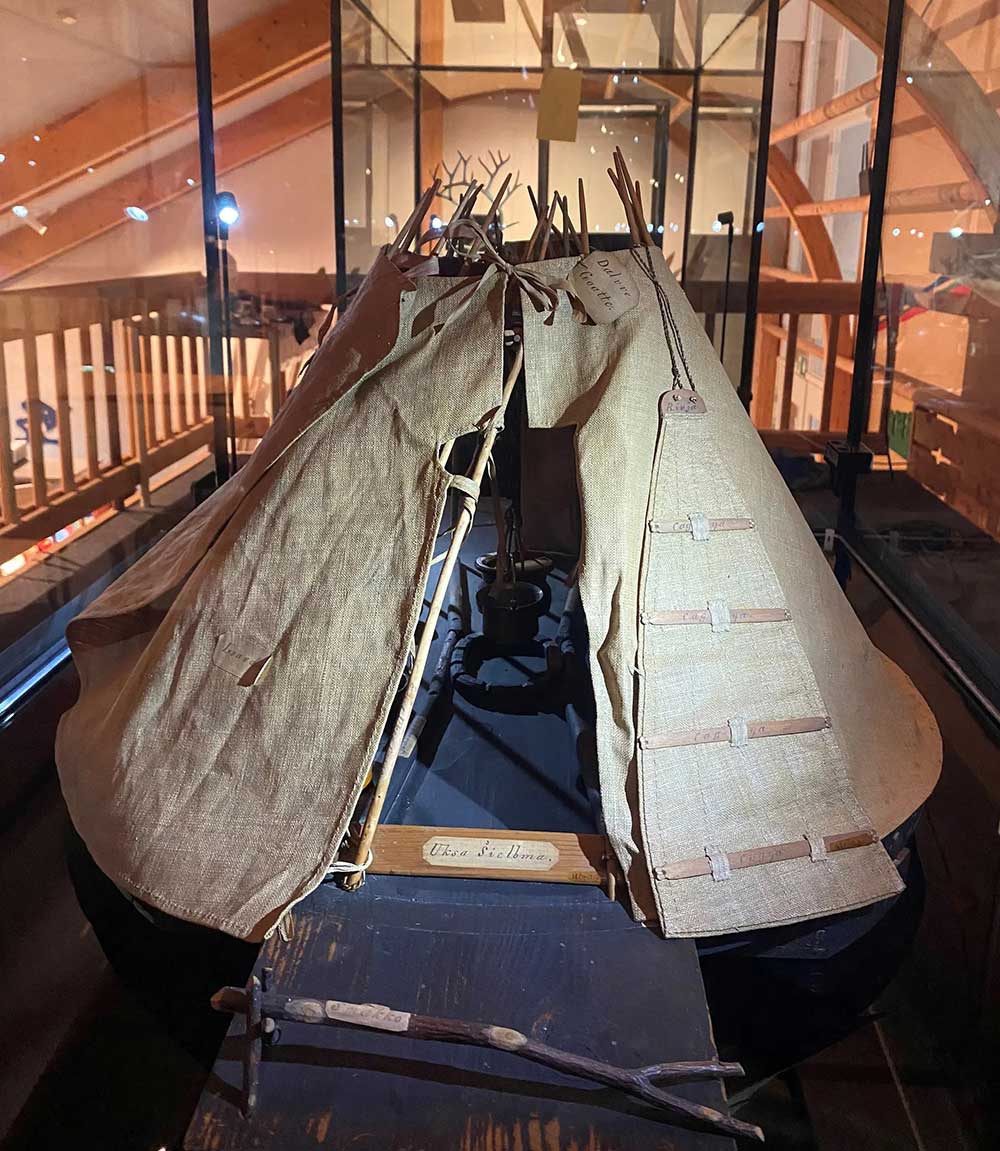
The miniature lavvo made by Jáhkoš Lásse in the collection of Pitt Rivers Museum, Oxford University, on exhibition at Guovdageainnu gilišillju.

Copies of plaster heads of Mattis Hætta, Peder Rik and Nils Karasjok, made upon request from Guovdageainnu gilišillju (RDM), for the exhibition 'Jáhkoš Lásse'.

Testing pesticides in milk strainer made of cow hair.
Photo: Gro Ween/Museum of Cultural History, University of Oslo

The return of the herd. Miniature reindeer made by Jáhkoš Lásse return home to Guovdageainnu gilišillju (RDM) for the exhibition.

Jáhkoš Lásse's miniature lavvo, on exhibition at the Pitt Rivers Museum, Oxford University.

Measuring a gákti from Nervei.
Photo: Tana Museum
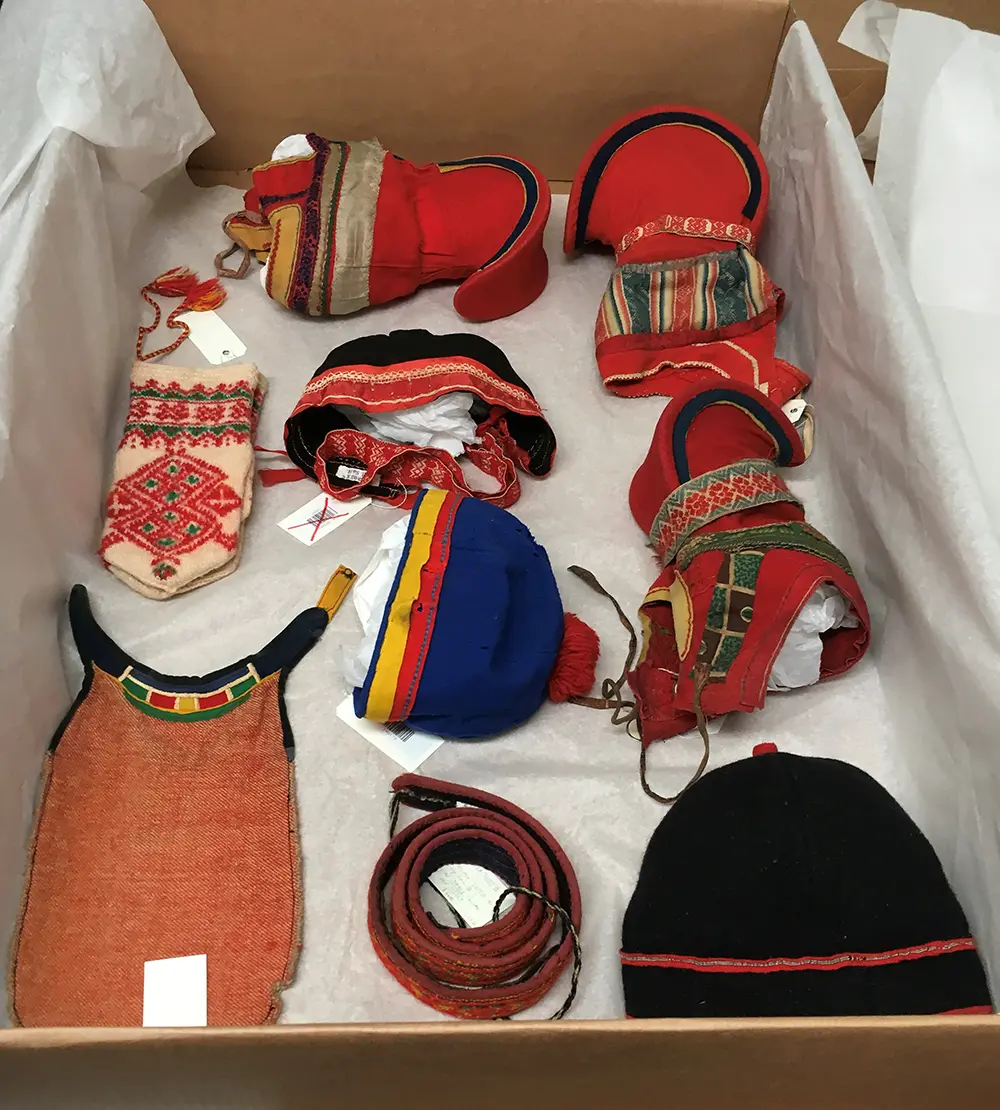
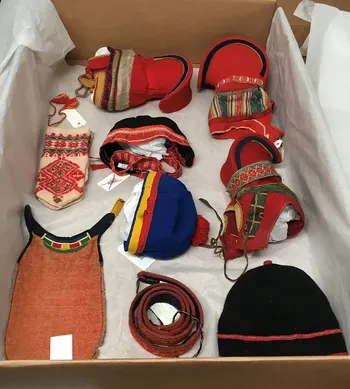
Card board box with carefully packed objects. From Folkemuseet's storage, displayed during visit from Sámi museums in the first year of the Bååstede process.
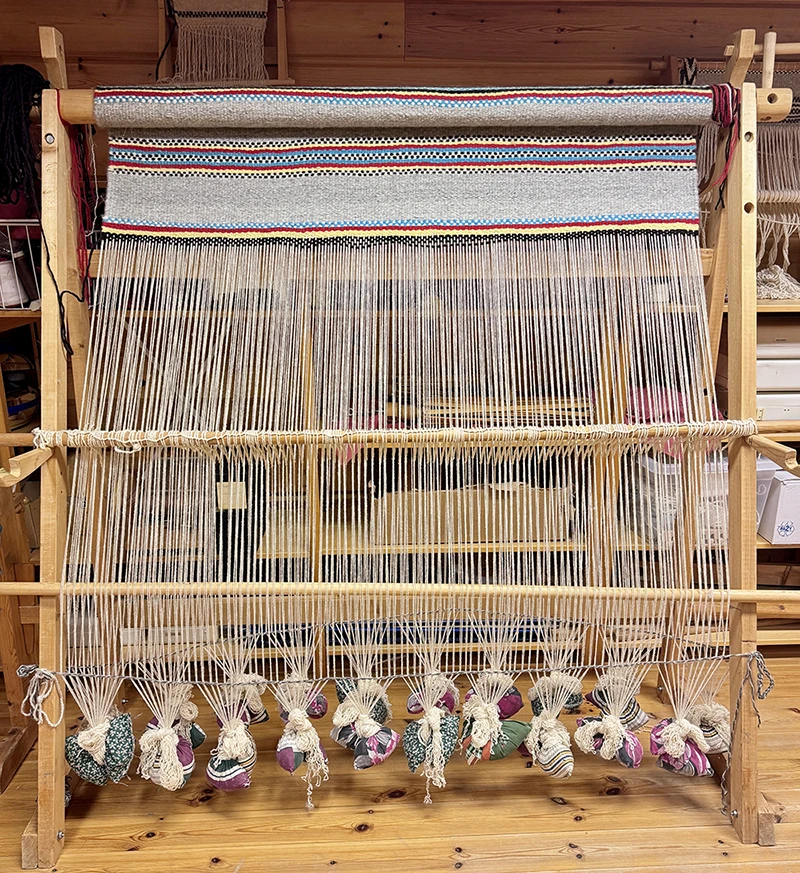
Close up of the copying of a weave, ráttnu, Center of Northern People.
Photo: Center of Northern People



On the premises of Sámi museums and Sámi methodologies
In the context of reconciliation, a repatriation is the beginning rather than the end of a process. On the premises of Sámi museums, and with the help of Sámi methodologies, MORE investigates how the consequences of the capital museums' management of Sámi artifacts can be remedied. Sámi scholar Liisa-Ravna Finbog writes that the opposite of assimilation, is that Sámi museums operate according to their cultural values and practices. Two key terms (and practices) in Sámi museum methodology are sámification and rematriation. These words describe activities designed to bring formerly alienated and Norwegianized, museum objects back: MORE explores 3 post-repatriation matters, how to return objects 1. pesticides, 2. provenance histories, and 3. the issue of copies, to a living Sámi culture.
Based upon existing partnership between Sámi museum institutions from all over Sápmi, duojarat and other Sámi experts, as well as Sámi and non-Sámi conservators, anthropologists, archaeologists and museum researchers and workers, MORE seeks to produce insights and experiences that has value for museums, but also for the ongoing state reconciliation processes.
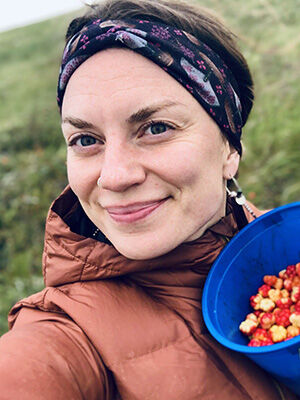
Gro Ween at the Museum of Cultural History is Principal Investigator for MORE. Her responsibilities include organization of meetings, seminars and publications. Together with work package leaders and other involved parties, she will also coordinate dissemination activities.
Ethical guidelines
The Saami Council's guidelines for Research participation
Ethical Guidelines for Research involving the Sámi People in Finland
Roadmap to Decolonial Arctic Research
Work packages
Work package 1 – Decolonization of collections
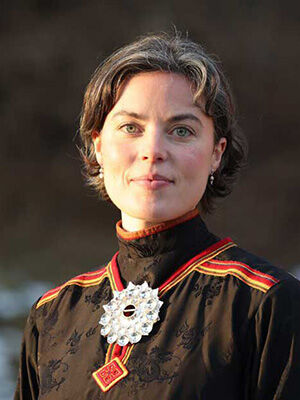
Susan Braovac leads this work package.
Seeks to make objects available to Sámi actors in Sámi museums. Becoming museum objects, the artefacts were doused in pesticides. Upon return, Sámi museum employees, cultural heritage experts – or craftsmen in the Sami communities, experience limitations in their dealings with the objects. This work package will measure the pesticides in the objects, and answer questions such as what pesticides were used, how much of them are left in the objects, can they be removed, or what else can be done to mitigate the toxicity and make the objects safe to handle. The work package will also provide advice regarding how to produce safe environments for the artefacts in ways that is possible in Arctic conditions and with limited museum budgets.
Participants
- Susan Braovac. Museum of Cultural History
- Calin Steindal, Museum of Cultural History
- Sophie Rowe, Museum of Cultural History
- Torunn Klokkernes
This work package will employ a PhD student with Sami language skills or cultural knowledge.
Work package 2 – Decolonization of collection histories
Anna Mossolova leads this work package.
From a Sami perspective, museums in the Norwegian capital have been dedicated to spread nationalist propaganda. Provenance histories are written from collectors and majority perspectives. Stories and representations have naturalized the hierarchical relations of the majority society and presented stories and objects from an outside perspective. These characteristics of knowledge production reduces the artefacts’ visibility for Sami museum experts and duojarat. Collection’s accessibility is hindered in all aspects of the museum machinery. In archives, storage, in exhibitions and digital databases. This work package rewrites science history of museum productions, for all purposes, including exhibitions, promoting Sami histories and object histories.
Participants
- Anna Mossolova, Museum of Cultural History
- Eeva-Kristiina Nylander, Oulu University
- Karoline Trollvik, Norsk Folkemuseum
- Gro Ween, Museum of Cultural History
Work package 3 – Decolonization of objects, returning to living culture
Karoline Trollvik leads this work package.
What work is required to make museum objects into living Sami cultural heritage? Renowned Sami academics such as Eeva-Kristiina Nylander, Liisa-Ravna Finbog and Aile Aikio have all recently written about this important work in their PhD theses. The practices considered, can strengthen transmission of duodji skills. The objects involved are themselves knowledge archives. This work package investigates how objects can be engaged to foreground the knowledge embedded in them, the local origin of the object, personal stories, conversations in Sami, include words for objects, elements and skills that otherwise have been remembered.
Participants
- Karoline Trollvik, Norsk Folkemuseum
- Eeva-Kristiina Nylander, Oulu University
- Gro Ween, Museum of Cultural History
- Anna Mossolova, Museum of Cultural History
A postdoctoral fellow with Sami language skills or cultural knowledge will be employed to contribute to work package 2 and 3.