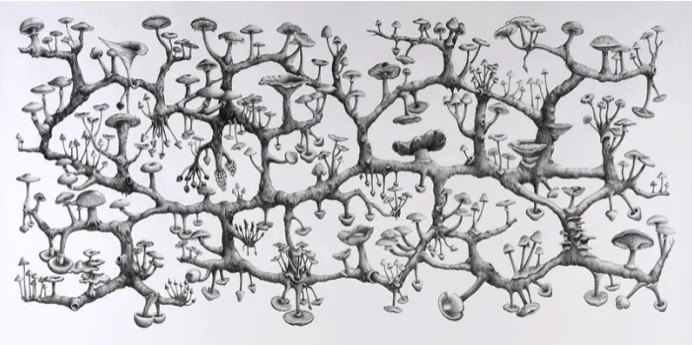

The term ‘assemblage’ has a long intellectual trajectory across social studies. In archaeology and museum collections, assemblage is practically synonymously with sets of things or constellations of objects categorised according to chronology, geographical location and shape distribution. Hence, it is favouring binary oppositions as well as linear modes of thinking and talking about the past. This study takes a critical look at the so-called ‘Ustinow collection’ currently housed at the Museum of Cultural History in Oslo—a large assembly of 3 000–4 000 objects which initially belonged to the Russian collector and aristocrat Baron Plato von Ustinow (1833–1920/21) by using French philosopher Gilles Deleuze and French psychoanalyst Félix Guattari’s concept of assemblage. By conducting a Deleuzoguattarian assemblage analysis, processes through which archaeological deposits come together relationally are discussed. In this way, the objects of the Ustinow collection are more than just adding things together in various descriptive manners, rather they may be regarded as multiple networks of association created through processes of becoming.