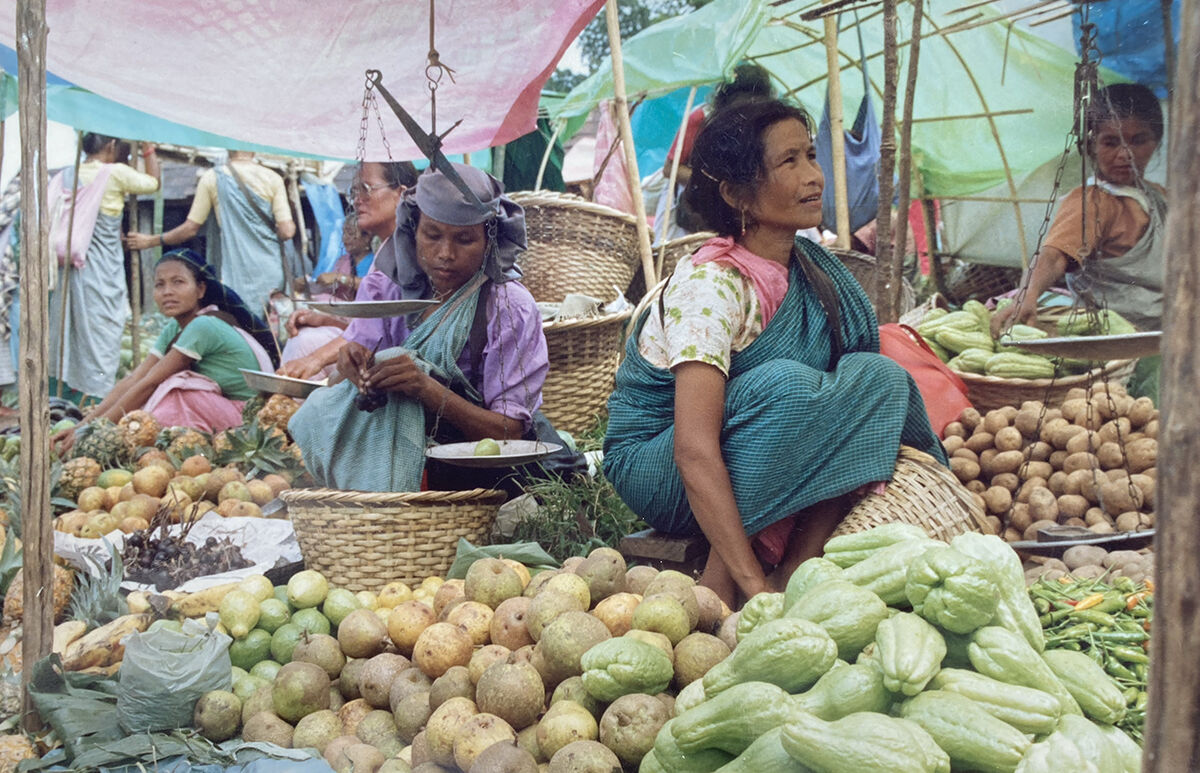
The Karbi people have close contact with neighboring peoples such as the Khasi in Meghalaya and some of the Naga cultures in Nagaland, therefore some objects from these various ethnic cultures were included. These are objects 46972, 46973 and 46976-47005. This was to showcase parts of a cultural diversity and not to provide comprehensive information about each of them or Assam as a state. After the exhibition had toured around Norway, all the objects in the exhibition were incorporated into the Museum of Cultural History's collection.


Object 46987 is a typical Assamese gamosa.
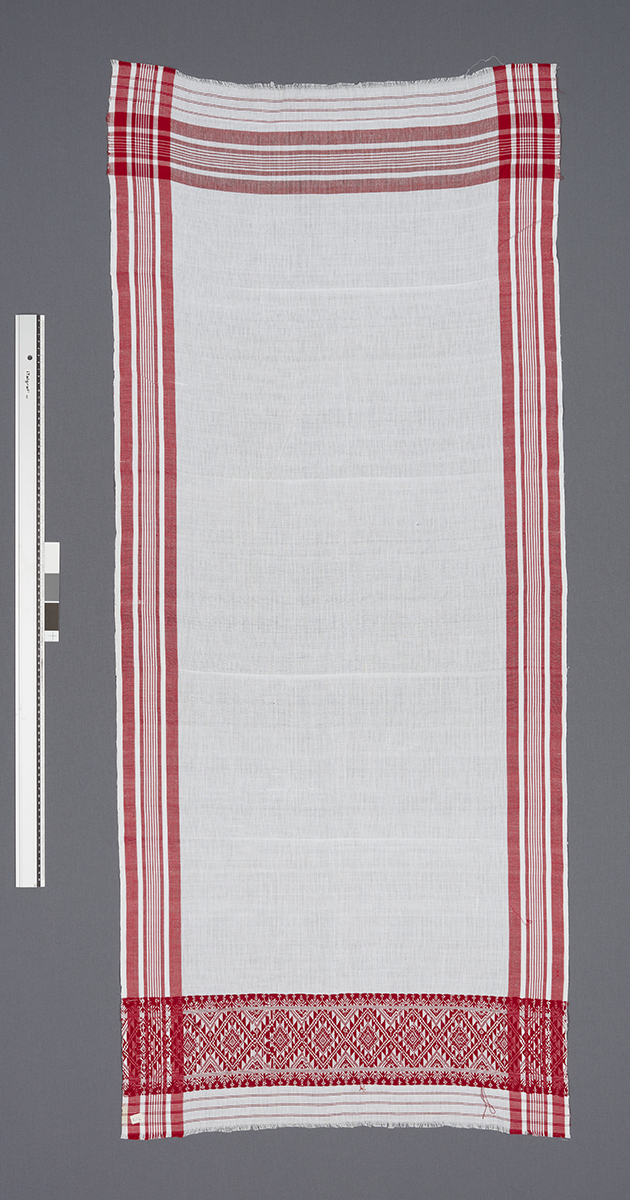
Gamosa has become a symbol of identity for the Assamese community.
Assam is both the name of the state and the dominating majority culture, the Assamese.
Gamosa is used during festivals as a headscarf and belt for men and boys, especially during Bihu (the spring festival). A gamosa is given as a gift, often hung around the neck of a respected guest. Relatives and close, respected friends receive gamosa from the bride at weddings, preferably woven by her. Weaving gamosas is part of the wedding preparations. Gamosas are integral to rituals, the ritual site, drums etc are decorated with gamosas. When the gamosa is not new anymore, it is used daily as a towel.

Young girls first learn to weave gamosas with various motifs. These motifs and borders can later be transferred to garments like mekhela-chaddar, the traditional garment for Assamese women. Designs serve as a pool of inspiration and are often transformed for use on the garments between the various cultures.
The textiles, objects 46988 – 46995 are traditional Mising garments.
The Mising people originally came from the mountains of Arunachal Pradesh. Legend tells of an internal conflict in which a group (a social stratum) of the people followed the river down to the plains, to Assam where they now live along the rivers, often in the most flood-prone areas. Majuli and Dukoakhanna are central areas for them. The term Miri was used during the colonial period; now the term Mising is used. The Mising people themselves do not like the term Miri. The Indian administration now uses the name Mising.
Mising women are considered highly skilled weavers. Their textiles are highly sought after. Assamese women also use Mising mekhela-chaddar (skirts and shawls). The winter shawls of the Mising people are commonly used in Assamese society. Nowadays, these clothes are mostly woven from synthetic fibres such as acrylic. It is cheaper, and the perception is that they keep their colours longer. The Mising garments in the collection are woven in good quality cotton. To get garments, an order to the weaver had to be placed. A portion of the purchase price is paid at the time of ordering so that the weaver has money to buy the yarn.

Other ethnic groups presented through the objects are:
- Rengma Naga in Karbi Anglong object 47004.
- Kuki from Senapati, Assam object 46997.
- From Meghalaya the Khasi, objects 46972, 46973, 46976, 46977, 46978, 46981, 46982, 46983, and 46985.
- From Nagaland: Aao Naga object 47001 and 47005.
- Sema Naga objects 46998 a – b, 46999, 47002, and 47003.
- Maring (Khoiganlu) Naga object 47000.