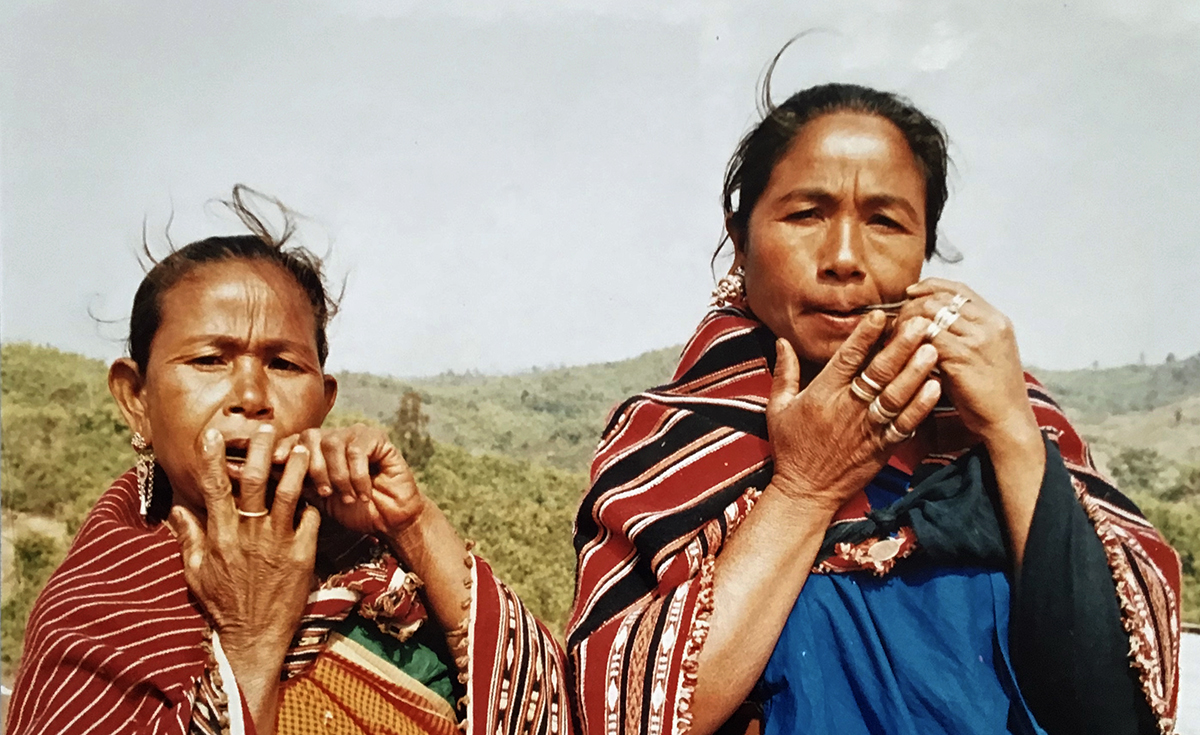
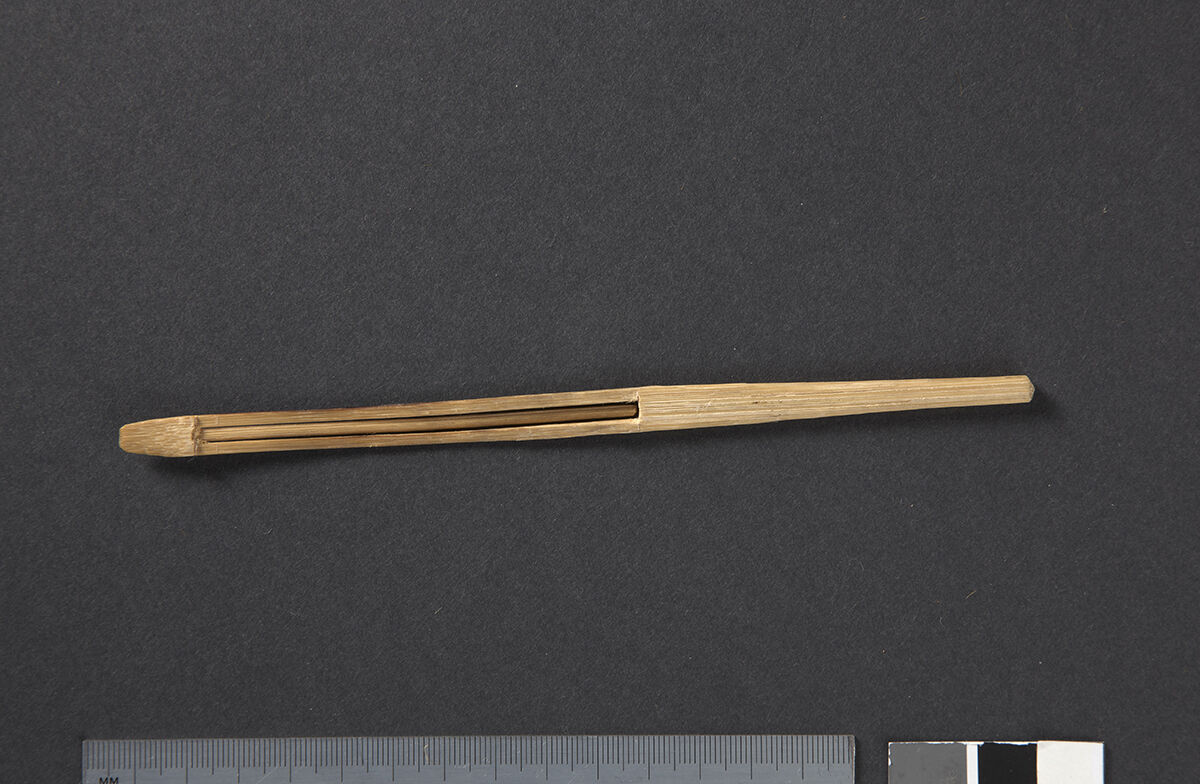
Karbi Anglong literary means the Karbi Hills. The elevation varies from 40 metres to 1363 metres. The climate is sub-tropical rainforest. A part of The Kaziranga National Park is located in Karbi Anglong.
Karbi Anglong district is an administrative unit in the Indian state of Assam. It is an autonomous district administered by the Karbi Anglong Autonomous Council (KAAC).
The Karbi Population living in Karbi Anglong and neighbouring districts numbers approximately 800,000 people. This is an informal account estimated by various Karbi organisations. The Census of 2011 states that the population is 956,313 in East and West Karbi Anglong, but this is total population, there is no census in relation to individual tribes. There are 23 tribes in Assam. Linguistically, the Karbi people belong to the Tibeto-Burman language group. The origin of the word Karbi is unknown.

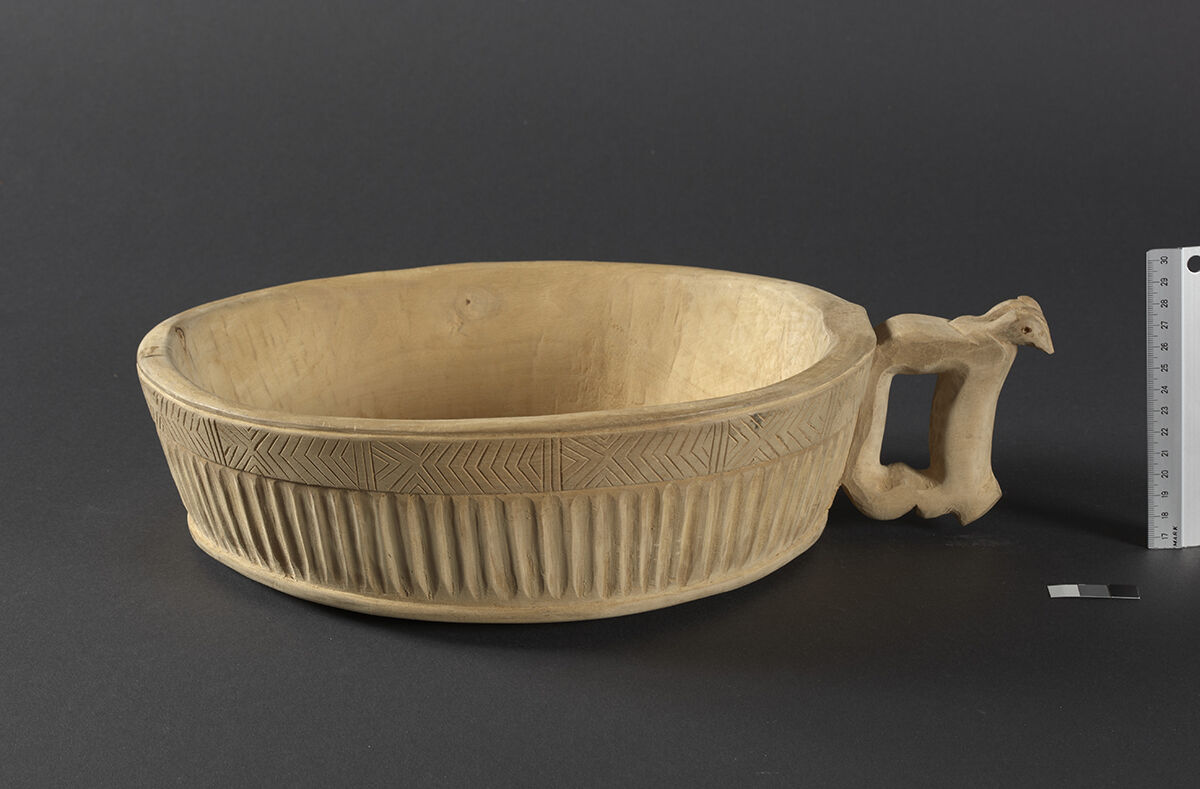
Historically and by ancestry they called themselves Arleng (literally "man" in the Karbi language). Like other indigenous peoples, it is difficult to find their exact ethnic-historical origin and where their wanderings through the ages have been. They were most likely a part of the migration from Central Asia and arrived in Assam many thousands of years ago. They are among the original inhabitants of this area.
The Karbi people have myths and legends about their origin and migration, telling that a long time ago, they used to live on the banks of the Kalang and Kopili rivers, along with the Tiwas and Borahis tribes, and in the Kaziranga area.
Previously, the Karbi people had their own form of government, the Pinpomar Amai, a sort of parliament with an elected king Lindok assisted by ministers, village headmen like Katharpo, the Dilis, the Habes, and the Pinpos. Today, this only exists as a socio-cultural institution with ceremonial and cultural duties.
The Karbi society has five major clans which are exogamous. The majority of the Karbi people still live in a traditional agricultural society. They live by subsistence farming with little cash crops. Urban centres have been growing in recent years.
The domains of women and men
Karbi society is patriarchal, after marriage the woman moves into her husband’s house. She will always keep her name given by birth of the clan she was born into, but she is ritually transferred to the clan of her husband during the marriage ceremony.
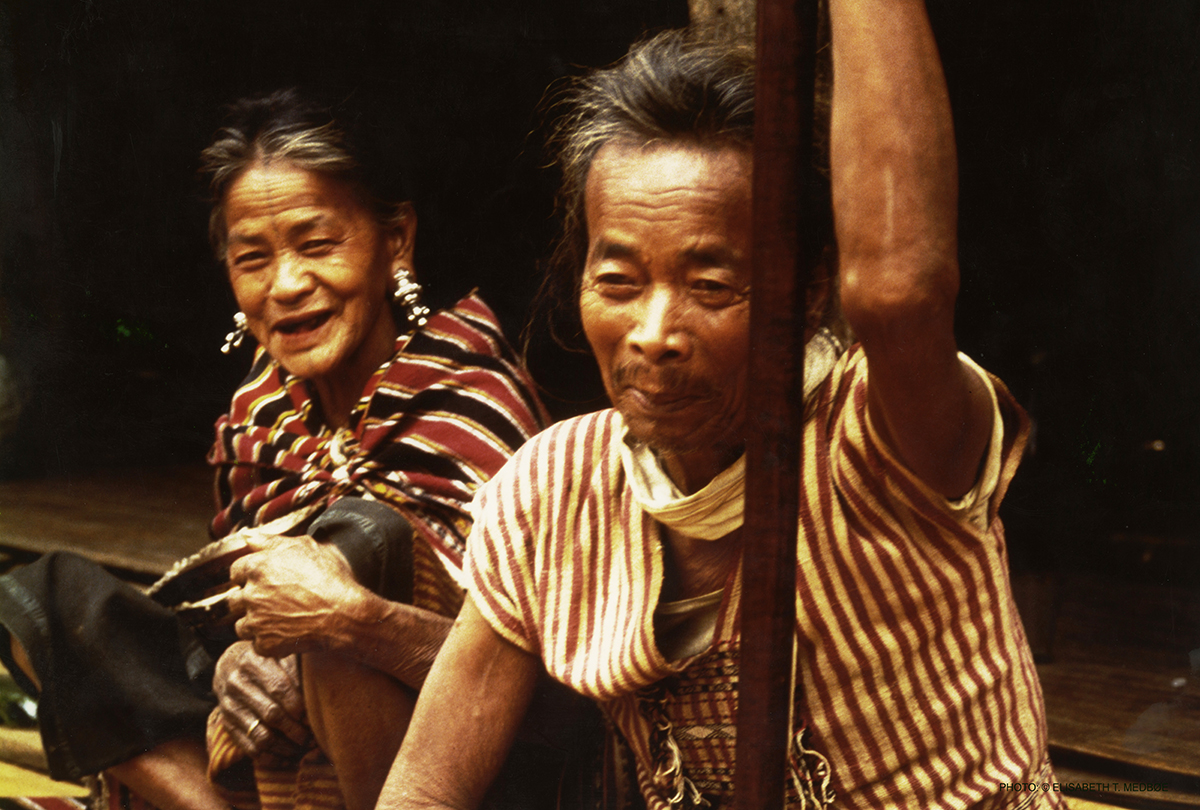
All tasks and duties defined for running the household such as making food, cleaning, dressing and taking care of its members, like children, elders etc. are primarily done by women. Rituals concerning Kacharhe, when someone dies, like dirge singing during funerals, is performed and sung by women. Charhepi is a specialised singer for the Chomangkan ritual where the soul of the dead is led to the abode of the dead Chom-Arong. Other rituals belonging to the big family, to a clan, community etc. fall under the domain of men. Hunting, sacrificing animals and slaughtering domestic animals are done by men, but at home for domestic use, women can give a helping hand.
Agricultural work, basically subsistence farming, is shared equally between men and women.
Inside the family, the husband and wife have almost equal status. If there are any disputes or discontent the husband and wife are unable to solve by themselves, members of their respective families are called together to find a solution to the problem. It is not socially accepted to subdue or exploit women, but there may be individual characters who are more dominating than others. With urbanisation and upward mobility of the middle class, the division of labour and domain of work between men and women is becoming less distinct.
Acknowledgements
The topics in this text are mainly gathered from informants in the Karbi community where knowledge until recent years basically have been conveyed orally from generation to generation. Therefore, there are local variations in how to convey social practices, skills, songs, and stories.
Thanks to everybody who has made the objects in the collection. Many are mentioned by name together with the photo of their object.
Spending time through many years many people have told and conveyed their knowledge about the Karbi culture without me writing down their names. Thanks to the welcoming Karbi community.
Special thanks to Libon Kropi, Chomang Kro, Rekha Rongpipi, Michael Timung, who always have been helping, guiding, assisting, and answering a lot of questions.
The weaver Kareng Beypi who taught me how to put up a loin-loom together together with telling a lot of stories, the Charhepis Kanam Beybpi, Chemar Rongpipi and Rengka Ingtipi, Lunsepo Hundorsing Bey, Lunsepi Moina Phurapi. and Hunmili weaving Corporation Ltd., Hamren.
Thanks to Professor Desmond L Kharmawphlang, NEHU, who helped identifying Khasi object names.