
The Karbi people who follow the traditional practices are known as 'Hemphu-Mukrang aso', which means offspring of Hemphu-Mukrang.
All the divine beings reside in Sining Angsong - which directly translated means: Above the skies/clouds. From there, Hemphu and his sister Rasingja came down to earth and mingled with the people. The human man Mukrang married Rasingja, and later Mukrang went back to Sining Angsong together with Hemphu and Rasingja.
There are many gods residing in Sining Angsong.


In the traditional Karbi belief, everything on earth has a protecting spirit, Arnam Keso, which is connected to the above, everything is interconnected. Most of the spirits are benevolent, but some are malevolent.

The spirits of the dead reside in Chom-arong which is somewhere in between the earth and above the clouds, like at the furthermost bluest hills.
Spirits of all kinds must be respected in prayers and rituals.
The Karbi people believe in the migration of the soul after death and in reincarnation. The death ritual is twofold, one at the time of death and the other later, sometimes several years later, for the soul's final journey to the realm of souls in Chom-arong before they can be reborn. Chomangkan is the latter ritual, and it is the largest socio-cultural event in Karbi society. The family of the deceased must often save for several years to afford this ceremony. If there have been multiple deaths in the family, the rituals are combined. The entire extended family, all surrounding villages, and all acquaintances of the deceased are invited, and often even more. This ritual lasts for three days and has its sub-rituals where the life of the deceased is reviewed and symbolically fulfilled. For example, if the deceased had eloped without completing the marriage rituals, the rituals are now performed with the spouse who is still alive.
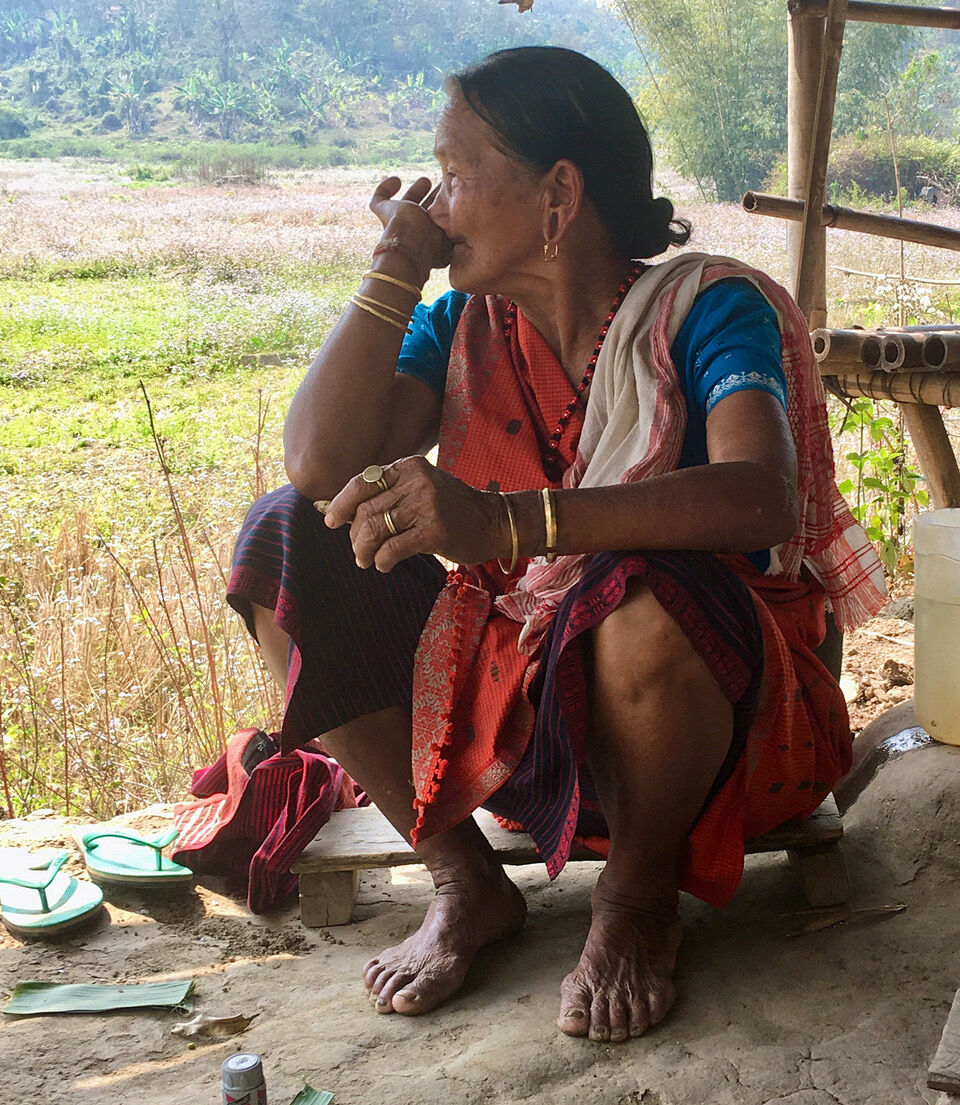
Charhepi, a ritual female singer, sings continuously and alternates with her assistants throughout the ritual. The Chomangkan song brings up all various aspects of life, death, the gods, and spirits. The soul of the deceased will be led to cross the river and will arrive at the gate of Chom Arong. There, the deceased will be received by the spirits residing in Chom-arong.
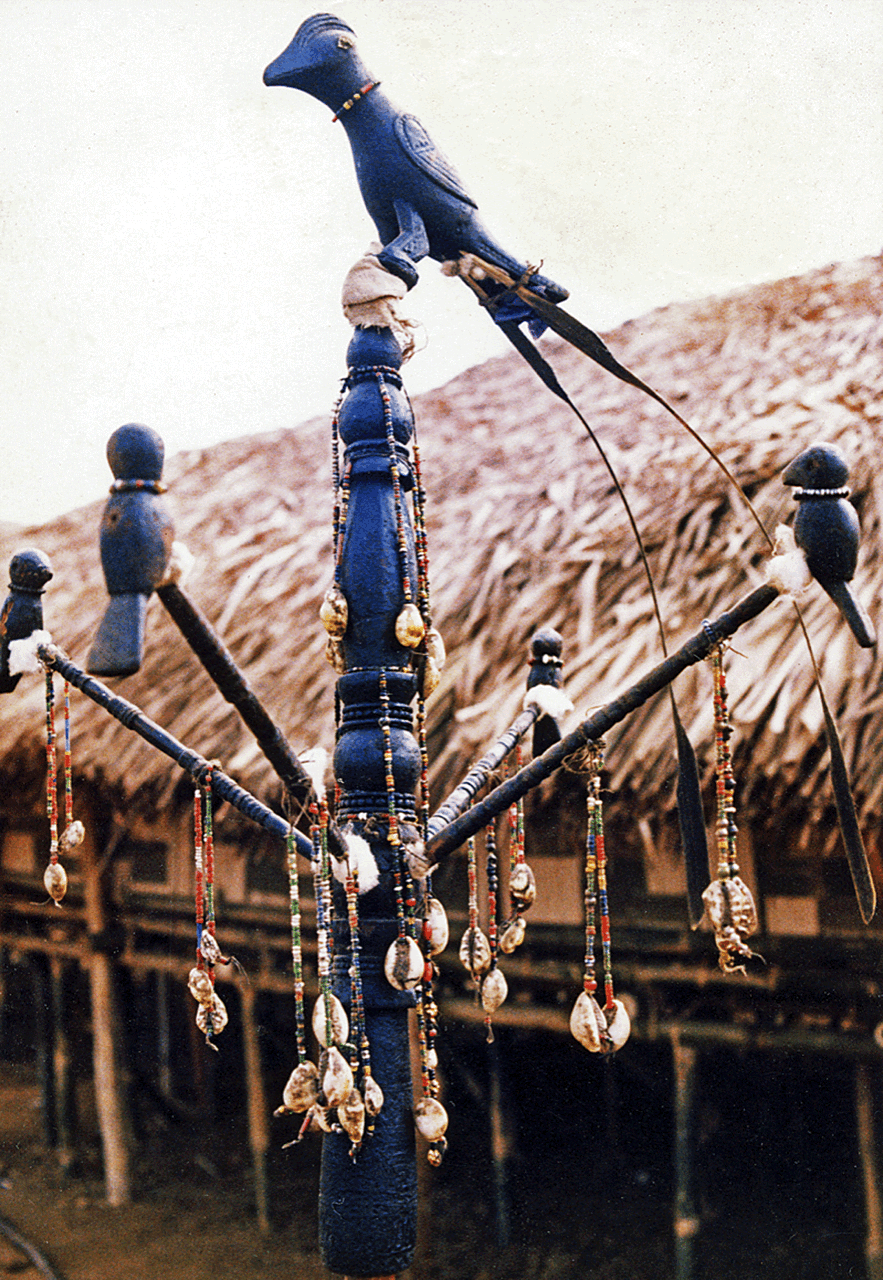
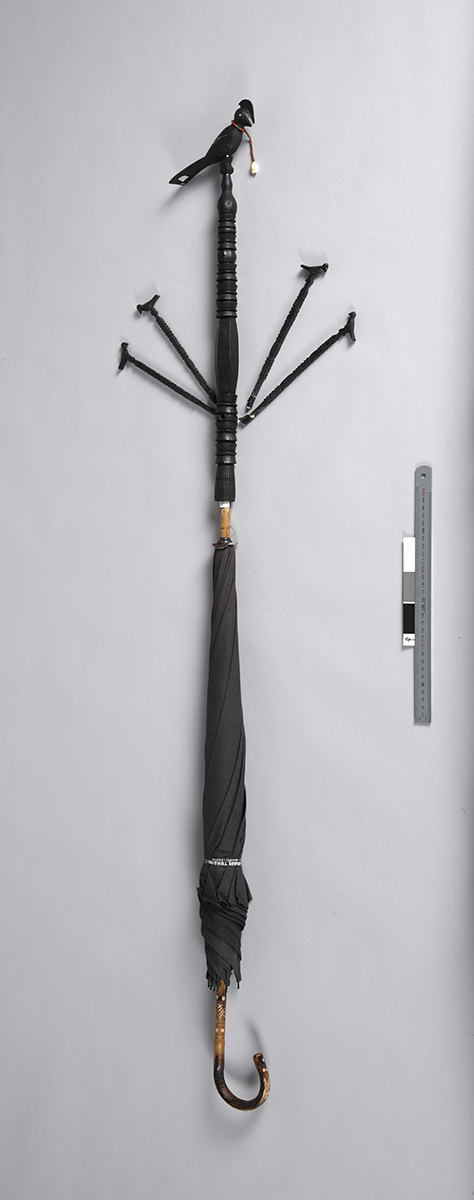
When this part of the ritual is completed, all the youth from the surrounding villages will come. The unmarried boys are gathered in Risomar, the village youth organisation. The leader Klengsarpo leads the procession carrying the Jambili Athon of their village, the deputy leader Klengdun carries Sirko. Then the young boys and girls dance around Jambili Athon and sing erotic songs to revive the life forces. Boys cannot dance with girls from their own clan. They prefer to dance with a girl from their mother's clan, but if there is no suitable girl from there, they will dance with a girl from one of the other clans.
Jambili Athon is a symbol of the Bengwai tree with many birds. The Vojaru, Drongo, "the bird that can speak all the bird languages", sits as a guardian in the crown. Jambili Athon embodies symbols of the Karbi people's views on life and death.
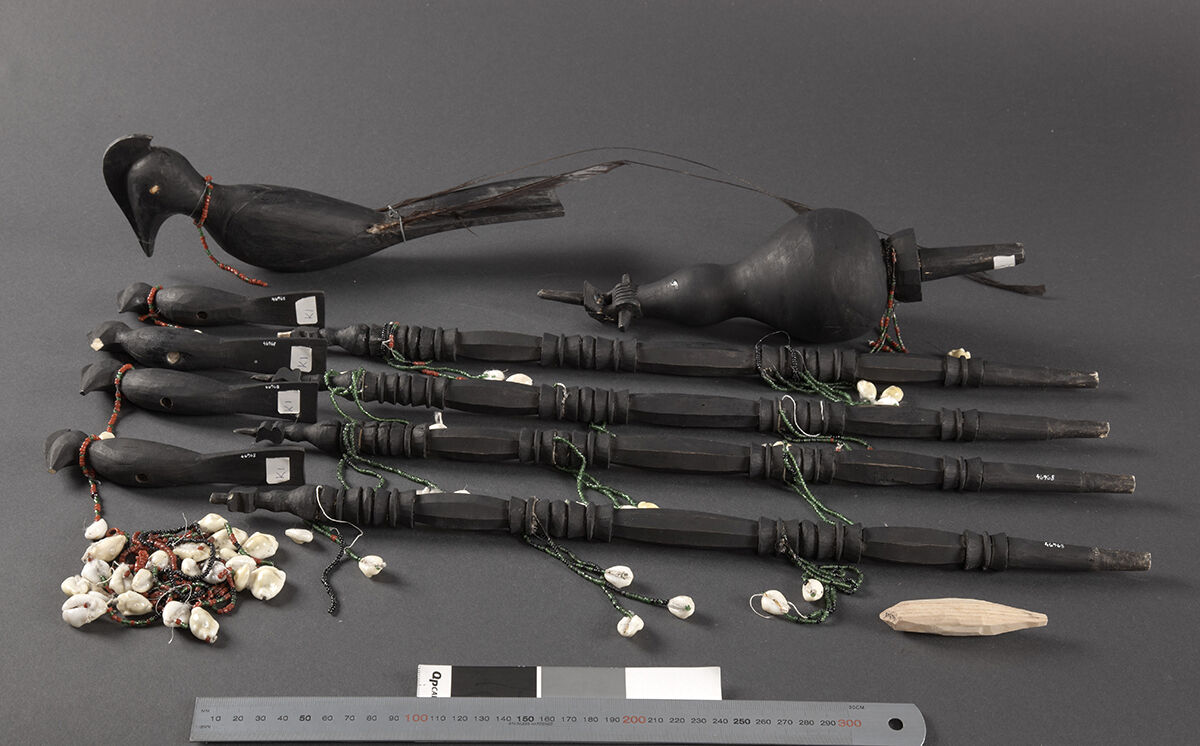
The Museum of Cultural History’s collection includes a Jambili Athon, object 46968. This Jambili Athon was made 1993. There are rituals associated with making a Jambili Athon; a Jambili Athon belongs to a village, nobody wants to give that away and not just anyone can make it. This example was made with permission from a village elder (leader) who conducted the rituals necessary for making this Jambili Athon. He knew that it was to be taken to Norway, used, and exhibited there.
Jambili Athon has become a symbol of identity, something specific to the Karbi people.
The Karbi community has been undergoing changes with new political demands and arrangements. A middle class with higher education and new professions is emerging. In order to keep cultural identity and secure rights, the culture must be defined more clearly.
The Sarku is object 46967.
Lodepi is a woman who can enter a trance and communicate with the dead. Often, it is a deceased person they have known who acts as a mediator between these two worlds. For Lodepi in Langlokso, it was her father-in-law. Lodepi sings a monotonous rocking song to connect with this soul. Once contact is established, those present can ask all sorts of questions, ranging from practical advice on what to plant next season to more personal inquiries about life and health. Anyone asking something personal must sit next to Lodepi so she can place her hand on that person.
Bottle gourds filled with rice wine or rice liquor are used in all rituals. See objects 46965 a-k. and 46966 a-c.
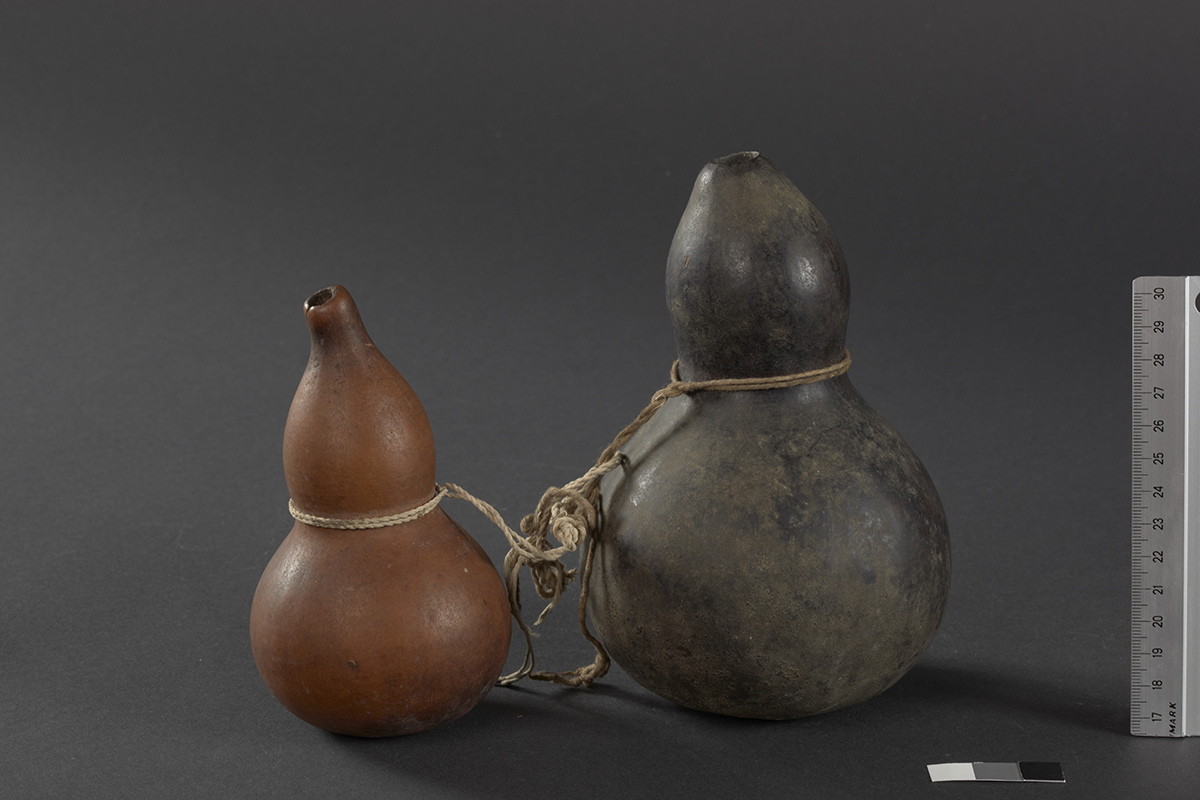
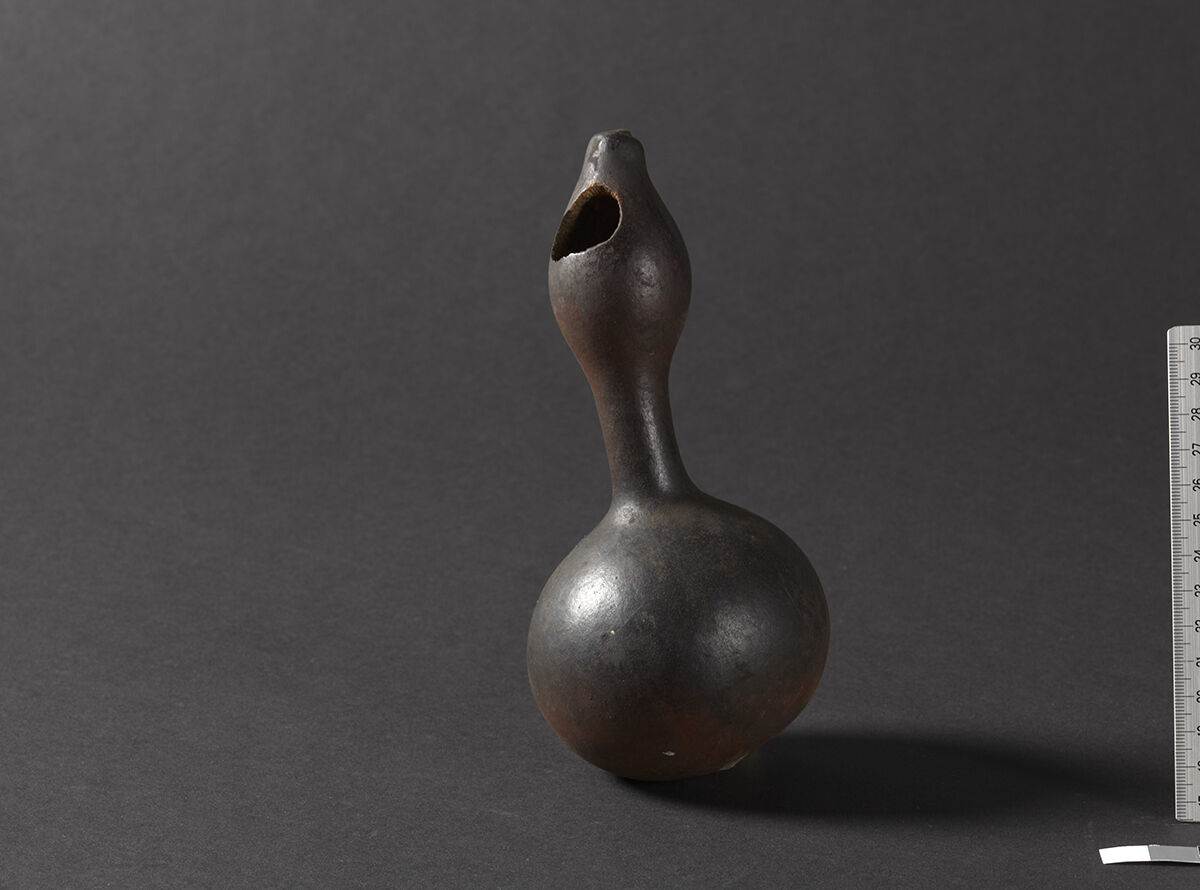
The bongkrok is used for serving Horlang rice wine during occasions such as the girls' ring ceremony, arnanketon, where the girl receives gifts, such as simsap, the bride’s jewellery and ornaments or clothing items like pini, pekok, and similar items from the prospective groom, as well as during the wedding, Adamasar. Next to the bongkrok, there is often a smaller bong containing Horarak.
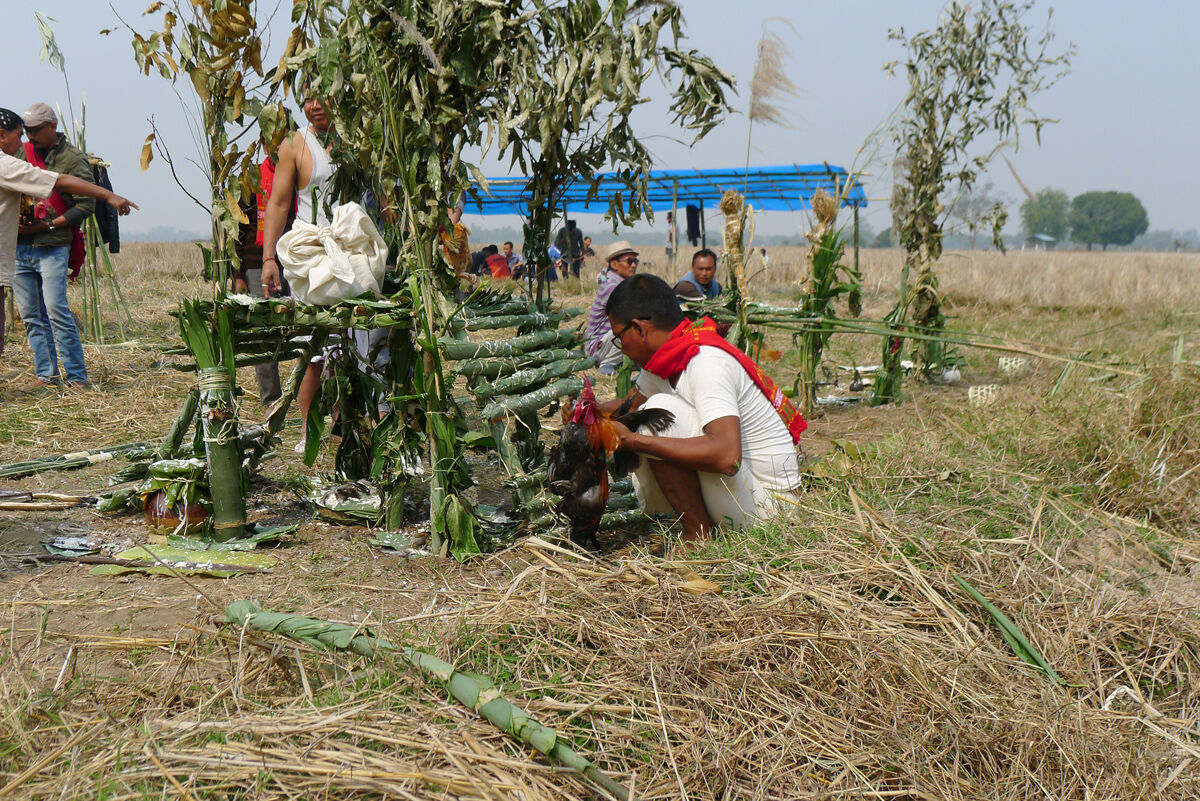
The story about how the Karbis started performing Seh-Karli
Libon Kropi has written down the story and practice in her family about performing Seh-Karli.
Hemphu had descended from Sining Angsong to earth accompanied by his sister Rasinja to propagate and educate the Karbi people on various things. They had descended into a Karbi village, and the people had welcomed them with open arms. They needed a place to rest so the village headman invited Hemphu and his sister Rasinja to stay with him, Hemphu replied, “I will come with you, but you have to build me a separate house”, so the villagers built him a new house. After the house was built, the villagers asked Hemphu to move in. Then Hemphu told the villagers that the materials used for building the house came from the forest and we don't know if they have any negative energy/spirits attached to them, so we must first cleanse the house before moving in (arbung-arphe kapangthir is to cleanse). At this point, the villagers didn't know what to do, so Hemphu asked the villagers to get him a rooster and taught them how to perform seh-karli; that is why Hemphu is also called Vo-hangpo (the one who asked for a rooster). A gentleman named Sum (pronounced Soon) was the first person who learned and performed seh-karli. This is how seh-karli practice started amongst the Karbis and this is still performed today.
The myths about how the various skills came to the Karbi people often start with the Gods in Sining Angsong. They see the life of the Karbi people from above, and want to give them a better, more beautiful life by contributing and teaching knowledge and skills.
To maintain a good relationship with the gods and the welfare of everybody, there are three very important annual rituals honouring different gods and ancestors:
Because everything is conveyed orally from generation to generation, there are local variations of the names of some of the gods, the way their altars are built at the time of worship and how it is performed.
Hem-Angtar, is for the welfare of the household of the big family, performed at the seat, the main house of the big family. The protector is Peng. Worship must take place every year to honour Peng. This is named Peng karli.
During the year, depending on the situation, there can be rituals performed for the welfare of the nuclear sections of the family or individuals at their home named Arnam Pharo-a-seh karkli, translated Seh-Karli for hundred gods.
Rongker is for the welfare of the people in the village. This worship is performed annually for one day in every village. Twelve deities who are important for the life of the households in their locality are worshiped. The ritual goes through four stages over three days. The ritual Thengpi-Thengso about trees and plants and the age-old treaty to keep balance between nature and the people can take place as well.
Tirim Kangduk is done to remember and worship the ancestors.
Ancestors are given space on the eating ground, sometimes textiles which have belonged to a particular ancestor are laid down on their place. The ancestors are offered rice wine and served a little bit of all types of food on a banana leaf. If insects come to eat it, this indicates that the spirits of the ancestors have come.