Previous events - Page 2

You are invited to an exclusive film screening of Returning Life. This captivating documentary follows Peter's journey down Mount Kilimanjaro to Kenya as he and a group of Chagga and Kamba-speaking elders perform a rain ritual in honor of their ancestor Horombo. Witness the crossing of linguistic, ethnic, and international boundaries and join the filmmakers for an open discussion on the film's form and content before its official release.

The book tells the story of the Institute for Comparative Cultural Differences, which was established in the wake of World War I. The author Jon Røyne Kyllingstad shows how the institute was characterized by both nationalist and internationalist activities and ideals, and discuss the institute's paradoxical development in the meeting point between comparative cultural studies and nation centered historiography.

Archaeological Friday Seminar with Professor John Schofield from the University of York, who will be presenting: "Small Wins and Wicked Problems: Heritage as a Transformative Practice".

Join us for an engaging talk by Manuela Fischer, as she delves into the intriguing connections between technology, power, and belief in the Moche society. Discover how the Museum's remarkable pre-Columbian artifacts shed light on ancient rituals and the challenges faced by ruling lords in Peru's coastal desert environment.

Exploring materiality and performance in ritual practice, this paper aims to convey the way text, but also things, are embedded in modes of signification. In contexts characterized by an entanglement of text, objects, and bodily practices, the written is inscribed in practice and form – its’ semantics trusted.

Objects of Understanding, co-authored by Roland Wittje and Peter Heering, explores the rich history of scientific instruments and educational artefacts from the 18th to 21st centuries, shedding light on their role in shaping scientific knowledge and practices. In this talk, Wittje will present the book and discuss the necessity of studying teaching collections at the University of Oslo to understand their origins, usage, and evolution within broader historical and geographical contexts.

Ethnographies of indigenous uses of digital platforms involves challenges of anonymity, in what can be a violent and charged political situation. This is how artistic approaches may help.

Arkeologisk fredagsseminar med phd-stipendiat Paulina Blaesild fra Göteborgs universitet som vil snakke om "Wet land vegetative mind. Mesolithic human:environment relations and plant composition change in wetlands with cases from Dagmosse bog, South Central Sweden".
Velkommen!

Welcome to the Museum of Cultural History's Annual Symposium of Egyptology.

Photographs play a fundamental role in the definition and management of museums and their collections. In this talk Professor Elizabeth Edwards suggests the extent to which one might argue that museums are held together by their photographic practices. Yet these processes are largely invisible in their quotidian presence, spread across collections management, conservation, display and marketing for instance.

Indigenous archaeology advocates for contemporary engagements with archaeological collections in ways that are meaningful and culturally sensitive to descendant communities.

Fraunhofer was one of the foremost international instrument makers of the 1900th century. His glass lenses revolutionized the science of astronomy.

We are pleased to announce Livio De Luca, CNRS MAP Laboratory, as the speaker for 2024 Gutorm Gjessing Lecture Series with the lecture "Notre-Dame de Paris: A cathedral of n-dimensional data and multidisciplinary knowledge in Heritage Science".

What was the role of central places in the creation, consolidation, and maintenance of collective identities, polities, and kingdoms in first-millennium Scandinavia? In this conference we want to explore what kind of places are ‘central’ to political systems and constellations in the emerging Viking Age.
In the past 20 years, university museums have become more relevant public spaces of engagement and open debate about contemporary scientific, political, economic, and social issues. This talk will examine the past two decades to identify key drivers and actors for this development, while also discussing future perspectives and challenges.
How do we experience sounds from the past in the present? Five experts will share their perspectives and recent experiences in the field. We hope to stimulate fruitful conversations, new ideas and inspiration for future projects. Open for all interested!
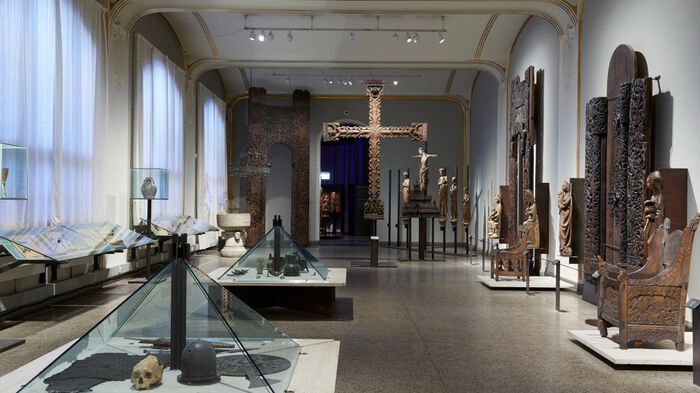
Can exhibitions be qualified as research-in-itself? If they can, then how? Which criteria should be the basis of evaluating and verify research exhibitions? The aim of the PhD course is to build a solid knowledge-base for understanding the relationship between exhibitions and research in the past and today, in order to collectively explore potentials and challenges for what can be called research-by-display.

Welcome to the 6th International Conference on Innovation in Art Research and Technology – InART2024 – in Oslo 4–7 June 2024.

How have individuals, communities, government, and non-government institutions imagined, regulated, and mobilised technical and scientific forms of knowledge together with objects and people across regions during the Cold War? Associate Professor Roland Wittje will discuss his research in the history of science and technology at the Indian Institute of Technology Madras.
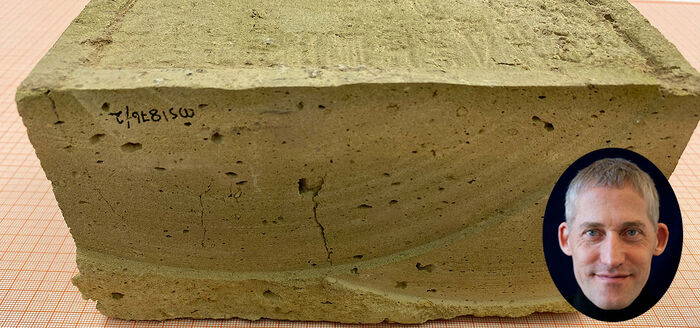
In 2021, the Embassy of Iraq sought assistance from Norwegian authorities and the Museum of Cultural History to recover suspected illicit cultural artifacts from a Norwegian collector. At this seminar, Professor Håkon Roland will discuss the operation and its aftermath, shedding light on the intricate relationships among academia, law enforcement, authorities, collectors, lawyers, and the media.

Axel Sommerfelt has been an important influence on Norwegian and Scandinavian anthropology, but his contributions are almost unknown. This book brings together some of his critical writings, newly written articles and an interview which positions him in the history of ‘North Sea’ social anthropology and shows his continued relevance.

Greenland’s repatriation work has resulted in the restitution of more than 30 000 cultural objects. In this SENKU seminar, Dr Christian Koch Madsen from Greenland National Museum & Archives will talk about the past but foremost the present and future repatriation strategies and processes in Greenland.

LUXCORE will present key results and new perspectives on the relationship between luxury, corruption, and global ethics. Our research challenges the effectiveness of anti-policies, highlighting the lack of meaningful change. The conference includes book launches, panel discussions, and a teaser of our forthcoming edited volume. Don't miss this opportunity at the Historical Museum – register now!

Dr. Barrie Cook from the Department of Coins and Medals, British Museum will give a talk 'A history of A history of the world in 100 objects and other projects, 2009-2020'.
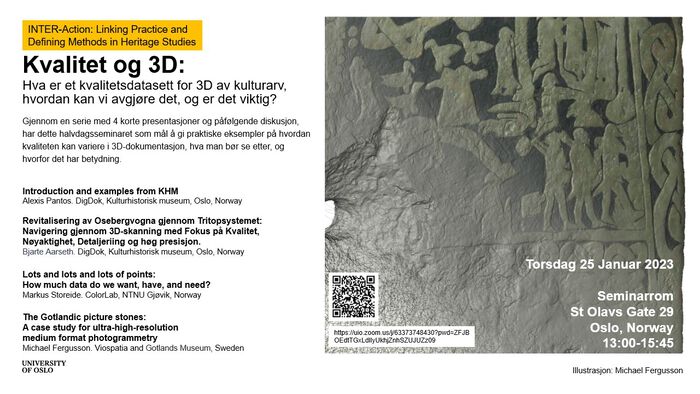
What is a quality 3D dataset in heritage,
how can we tell, and does it matter?