Tidlegare arrangement - Side 2

I boken kan man lese om Instituttet for sammenlignende kulturforskjeller som ble opprettet i kjølvannet av første verdenskrig. Forsker og forfatter Jon Røyne Kyllingstad viser hvordan instituttet var preget av både nasjonalistiske og internasjonalistiske aktiviteter og idealer, og belyser instituttets paradoksale utvikling i spennet mellom sammenlignende kulturvitenskap og nasjonsbyggende historieskriving.

Join us for an engaging talk by Manuela Fischer, as she delves into the intriguing connections between technology, power, and belief in the Moche society. Discover how the Museum's remarkable pre-Columbian artifacts shed light on ancient rituals and the challenges faced by ruling lords in Peru's coastal desert environment.

Exploring materiality and performance in ritual practice, this paper aims to convey the way text, but also things, are embedded in modes of signification. In contexts characterized by an entanglement of text, objects, and bodily practices, the written is inscribed in practice and form – its’ semantics trusted.

Objects of Understanding, co-authored by Roland Wittje and Peter Heering, explores the rich history of scientific instruments and educational artefacts from the 18th to 21st centuries, shedding light on their role in shaping scientific knowledge and practices. In this talk, Wittje will present the book and discuss the necessity of studying teaching collections at the University of Oslo to understand their origins, usage, and evolution within broader historical and geographical contexts.

Ethnographies of indigenous uses of digital platforms involves challenges of anonymity, in what can be a violent and charged political situation. This is how artistic approaches may help.

Det kommende Vikingtidsmuseet blir en bauta i museumsverdenen med en av de største arkeologiske utstillingene av vikingtiden. Hør professor Svein Gullbekk fortelle om den myntfaglige delen av utstillingen, samarbeidet mellom de ulike fagkompetansene og dilemmaer som uunngåelig oppstår når mange stemmer skal høres i et stort prestisjeprosjekt.

Photographs play a fundamental role in the definition and management of museums and their collections. In this talk Professor Elizabeth Edwards suggests the extent to which one might argue that museums are held together by their photographic practices. Yet these processes are largely invisible in their quotidian presence, spread across collections management, conservation, display and marketing for instance.

Indigenous archaeology advocates for contemporary engagements with archaeological collections in ways that are meaningful and culturally sensitive to descendant communities.

Josephine Munch Rasmussen and Sam Hardy will be giving a presentation of recent initiatives on safeguarding cultural heritage in Ukraine and other areas in war and conflict through the DECOPE research project.
In the past 20 years, university museums have become more relevant public spaces of engagement and open debate about contemporary scientific, political, economic, and social issues. This talk will examine the past two decades to identify key drivers and actors for this development, while also discussing future perspectives and challenges.

How have individuals, communities, government, and non-government institutions imagined, regulated, and mobilised technical and scientific forms of knowledge together with objects and people across regions during the Cold War? Associate Professor Roland Wittje will discuss his research in the history of science and technology at the Indian Institute of Technology Madras.
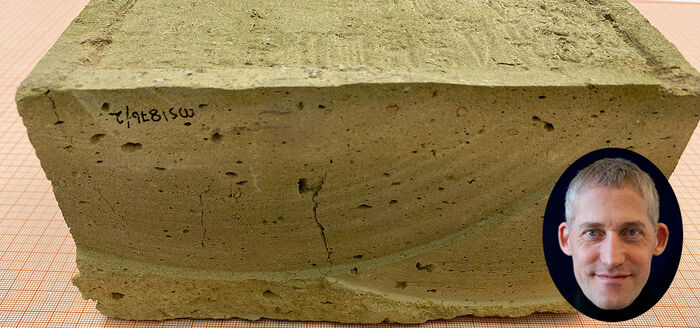
In 2021, the Embassy of Iraq sought assistance from Norwegian authorities and the Museum of Cultural History to recover suspected illicit cultural artifacts from a Norwegian collector. At this seminar, Professor Håkon Roland will discuss the operation and its aftermath, shedding light on the intricate relationships among academia, law enforcement, authorities, collectors, lawyers, and the media.

Greenland’s repatriation work has resulted in the restitution of more than 30 000 cultural objects. In this SENKU seminar, Dr Christian Koch Madsen from Greenland National Museum & Archives will talk about the past but foremost the present and future repatriation strategies and processes in Greenland.

This marks the book launch of two edited volumes that explore the subject of human sacrifice from diverse – archaeological, anthropological, and theoretical – perspectives.

Dr. Barrie Cook from the Department of Coins and Medals, British Museum will give a talk 'A history of A history of the world in 100 objects and other projects, 2009-2020'.

Welcome to the SENKU seminar with Igor Krupnik, a curator from the National Museum of Natural History, Smithsonian Institution!

Øivind Fuglerud will present his paper in progress entitled 'Conspiracies, ideology and myth: Some aspects of the Sri Lankan Aragalaya in a wider setting'. All KHM colleagues are welcome to join the discussion!

SENKU seminar on November 30 will host two curators from the Wereldmuseum, the Netherlands: Cunera Buijs and Erna Lilje who will discuss the role of Indigenous knowledge and engagement in museum research and exhibition making.

Australian Indigenous people held a very particular position in European ethnography at the beginning of the last century. For a long time, the colonial narrative has been shaping the way Aboriginal cultures were interpreted and exhibited in European museums. How do Aboriginal Australians tell their own histories and how should European museums engage with this today?

Join us in this lecture where Professor Batsaikhan Ookhnoi reconsiders the role of the 8th Bogdo Jebtsundamba Khutukhtu – in rough terms, the Mongolian equivalent of Tibet’s Dalai Lama at the time – in engineering the national independence of Mongolia from the Qing Empire in 1911.

Social anthropologist and historian of ideas Lars Risan gives his perspective on the fascinating story of two girls allegedly raised by wolfs in the early 1900s and how that incident affected new scientific understandings of human nature.

Neil Curtis, Head of Museums and Special Collections at the University of Aberdeen will share the story of the Benin Bronze, from its casting in the late 18th century to its return to Benin City in February 2022, exactly 125 years after it was looted.

What role do artists play in the repatriation of looted cultural property to the communities of origin?

Ládjogahpir is a traditional Sámi hat for women. How do Sámi women engage with it and discuss it nowadays? What are the particular meanings attached to it in current Sámi society, and in the processes of remaking and reusing the ládjogahpir?
The Challenge of Being a World Culture Museum Today.